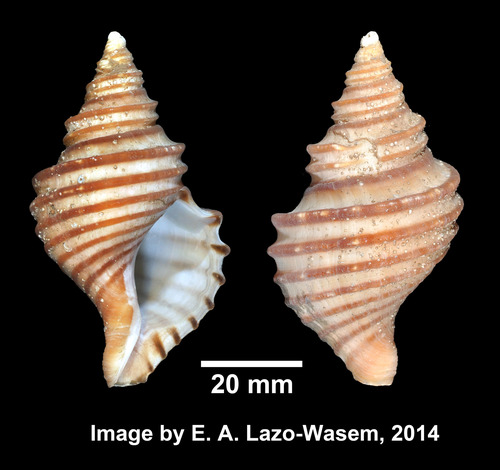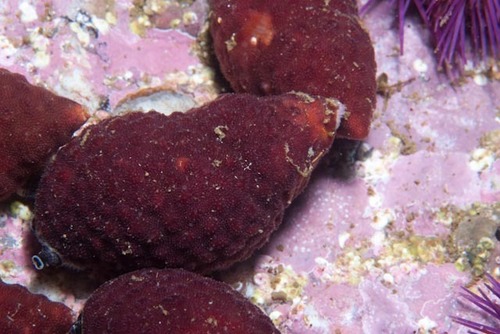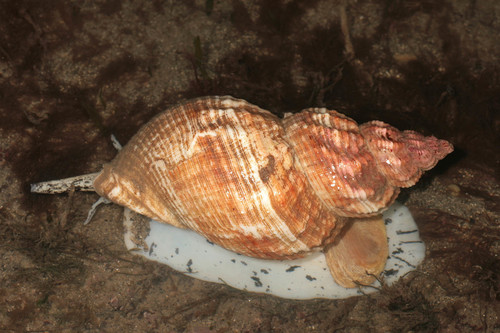
About Buccinum undatum Linnaeus, 1758
Buccinum undatum, commonly called the common whelk or the waved buccinum, is a large, edible marine gastropod that belongs to the family Buccinidae, the group of "true whelks". This species is a well-known member of the Northern Atlantic marine fauna. It can be found along the shores of the United Kingdom, Ireland, France, Norway, Iceland, various other northwest European countries, some Arctic islands, and North America reaching as far south as New Jersey. It prefers colder temperatures and cannot survive when temperatures go above 29 °C (84 °F). This species lives mainly on soft bottoms in the sublittoral zone, and can occasionally be found on the littoral fringe, where living individuals are sometimes found at low tide. It does not adapt well to living in the intertidal zone because it cannot tolerate low salinities. If exposed to air, it may crawl out of its shell, putting it at risk of desiccation. Since the early 1970s, researchers have observed disappearing or shrinking whelk populations, particularly in the North Sea and the Wadden Sea. Large beds of empty whelk shells have also been found in areas where no living whelks occur. Imposex, a condition where female whelks develop male gonads, has been detected in this species since the early 1990s, and it is believed to be caused by activity from the shipping industry. Specifically, TBT has been shown to lower the viability of common whelk populations. Common whelk egg cases often wash up onto the intertidal zone of beaches, where they are colloquially called sea wash balls. Buccinum undatum is widely eaten, and it is sometimes referred to by its French name, bulot. There is an active commercial fishery for this species on many shores around the world. It is trapped in pots that use dogfish and brown crab as bait. This species can be confused with Neptunea antiqua, the red whelk, which is poisonous to humans.