About Bryonia alba L.
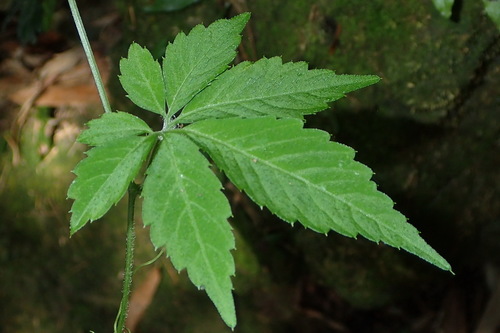
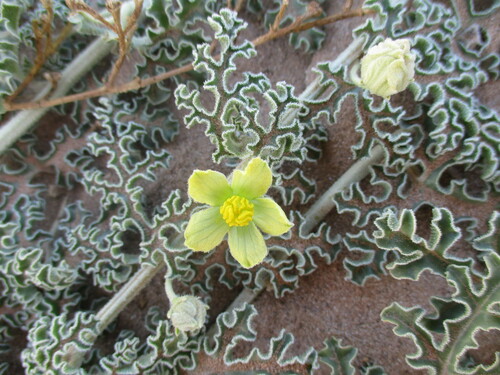
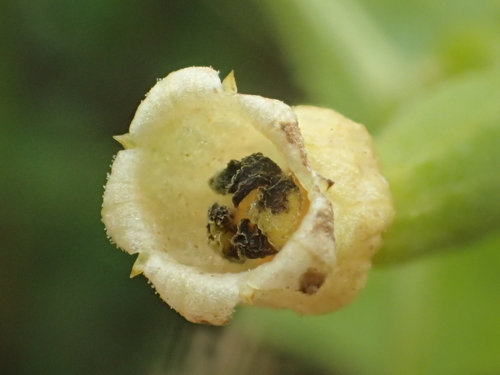
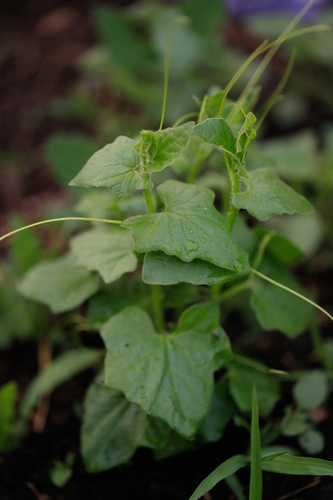
Bryonia alba L., commonly called white bryony, is an herbaceous perennial vine in the cucumber family. It is monoecious but diclinous, meaning separate male and female flowers grow on the same individual plant, and it has a tuberous yellow root. Its greenish-white flowers measure 1 cm (0.39 in) across. Long curling tendrils, flowers, and fruit all grow from the axils of its palmately lobed leaves. Its fruit is a 1.5 cm (0.59 in) berry that turns black as it ripens. White bryony is native to Europe and Northern Iran. It has been introduced to the United States, where it is classified as a noxious weed in Washington and Idaho. Birds are the most common seed dispersal agent for this species. Birds deposit seeds in areas where they eat and nest, so white bryony is commonly found in native hawthorn patches, windbreaks, shelterbelts, riparian buffers, and wildlife plantings. The leaves of Bryonia alba can serve as a food source for cabbage moth larvae. All parts of Bryonia alba contain the poison bryonin, which can cause illness or death. Livestock can also be poisoned if they consume the plant's fruit and leaves. A lethal dose for adult humans is 40 berries.