About Brunsvigia josephinae (Redouté) Ker Gawl.
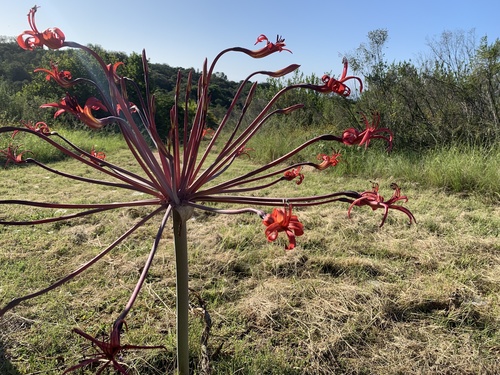
Brunsvigia josephinae, commonly known as Josephine's lily or candelabra lily, is a deciduous, subtropical Brunsvigia species native to South Africa. It is distinguished by deep pink to red flowerheads that measure roughly 12 to 15 inches long. This species grows best in medium humidity, at temperatures between 50 and 75 °F (10 to 24 °C). Flowering stems emerge from its bulbs in March and April, and leaves develop later. Bulbs can take 12 years to establish before they begin flowering, but they produce flowers annually once they are settled. When in flower, B. josephinae reaches about 0.65 m (650 mm) in height. Its bulbs are around 200 mm in diameter and usually sit exposed above ground. Leaves only grow in winter; they are blueish grey, and plants typically produce 8 to 20 leaves each. Dark red, tubular flowers, each 15 mm long, grow in clusters of 30 to 40 flowers per plant atop the tall stalks, blooming from late summer to autumn. When grown from seed, plants can take as long as 14 years to reach maturity. This species is available from commercial plant suppliers, and was named for Joséphine de Beauharnais, the empress of Napoleon.