About Brotogeris versicolurus (Statius Muller, 1776)
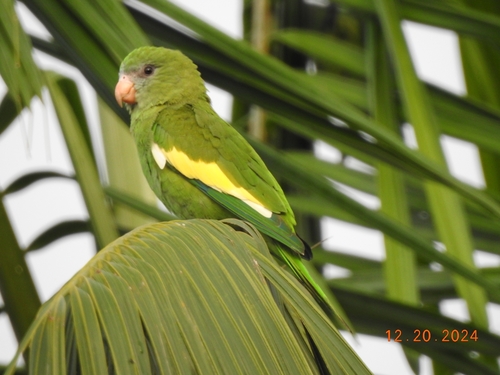
The white-winged parakeet, scientifically named Brotogeris versicolurus (Statius Muller, 1776), typically measures 22 cm in length and is mostly green in color. It has a trailing yellow edge along its folded wings. Its most distinctive characteristic is white wing patches that are most visible when the bird is in flight. This species is closely related to the yellow-chevroned parakeet, and the two have often been treated as a single conspecific species. In their native habitat, white-winged parakeets feed mostly on fruit and seeds. Feral populations have adapted to consume blossoms and nectar, and feral birds also visit bird feeders. Wild white-winged parakeets primarily inhabit disturbed forest and forest clearings around human settlements, and they rarely enter deep tropical forest. In captivity, a pelleted or seed-based diet is acceptable, and this should be supplemented with fresh fruits and vegetables, as well as freshly sprouted seeds.