About Brissus unicolor (Leske, 1778)
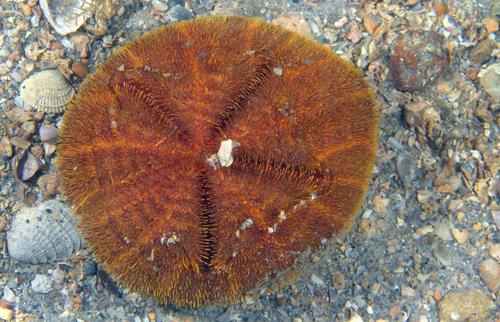
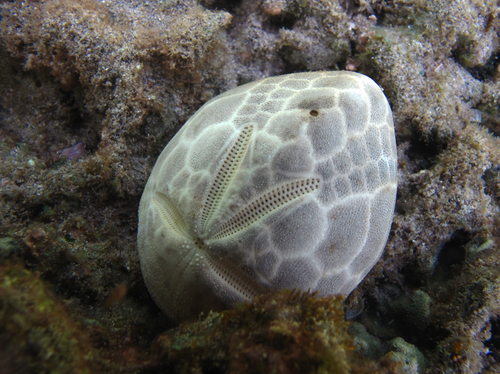
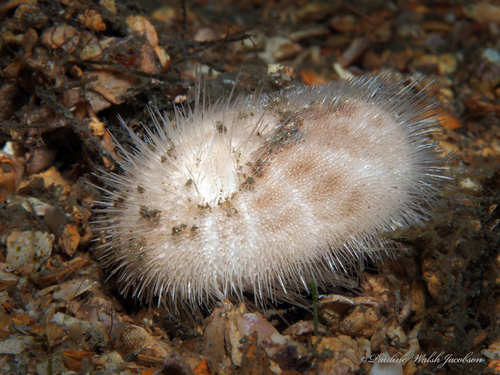
When alive, the entire body of Brissus unicolor is covered in brown spines. After this sea urchin dies, its shell, which is called a "test", develops a distinctive pattern made up of many grey spots. These spots only stay on the test temporarily; they disappear over time, leaving the test white or pale brown. As Brissus unicolor matures, its test grows thicker, and can reach a length of around 14 cm. This urchin buries itself in coarse sand at depths between 6 and 250 meters, which means alive individuals are rarely observed. In the Mediterranean Sea, they can sometimes be found buried in sediment near the tapeweed Posidonia oceanica. This species is native to the Mediterranean Sea and parts of the Atlantic Ocean.