About Breynia oblongifolia (Müll.Arg.) Müll.Arg.
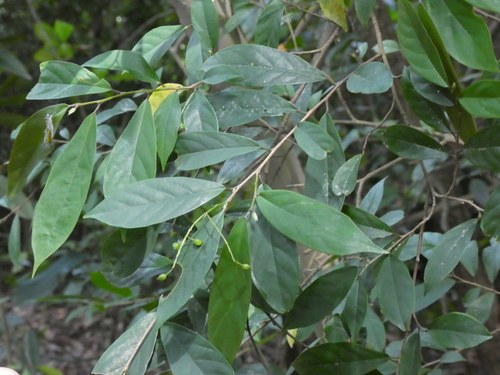
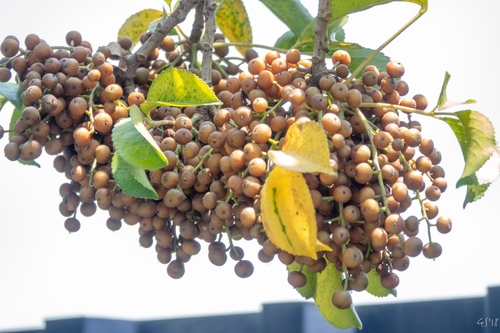
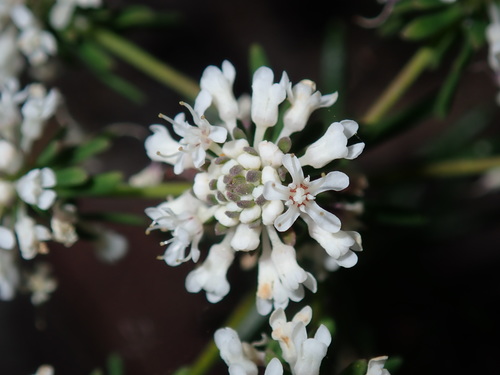
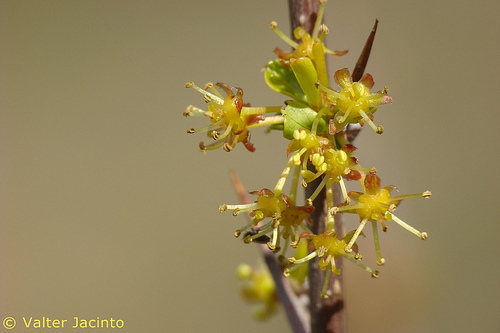
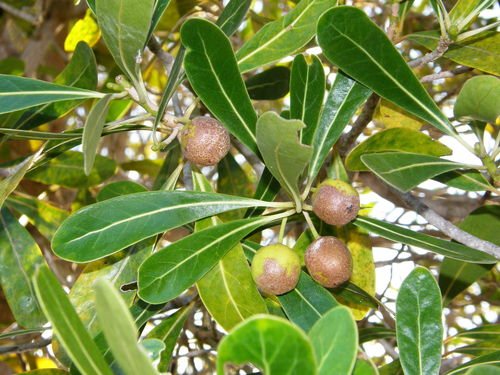
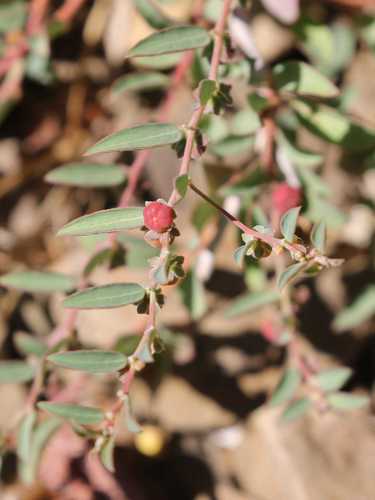
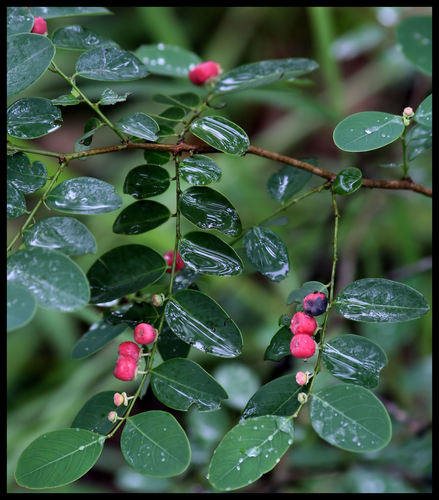
Breynia oblongifolia, commonly known as coffee bush, is a naturally occurring shrub that reaches up to 3 metres (10 feet) in height. Its native range includes Australia and New Guinea. This species bears alternate, distichous, ovate simple leaves that measure 20–30 mm (0.8–1.2 in) long by 10–20 mm (0.4–0.8 in) wide. Small green flowers form during spring and summer, which are followed by orange or pink berries roughly 6 mm (0.24 in) in diameter that turn black when fully ripe. The species can tolerate a very wide variety of environments. It grows across multiple habitat types: from coastal tropical rainforests in North Queensland and New Guinea, to cool Eucalypt woodlands in south-eastern New South Wales, and arid Acacia woodlands in Western Queensland. This plant grows readily in disturbed areas, can recolonize cleared sites, and occasionally appears in undisturbed gardens. When fire is removed from fire-adapted ecosystems, this species can spread and displace fire-dependent species. It provides food for many different animals, which feed on its leaves, berries, and flowers. This native shrub may be mistaken for Senna species, which occupy similar habitats. Unlike the simple leaves of B. oblongifolia, Senna has pinnate leaves divided into separate leaflets attached to a central petiole. Senna also produces showy yellow flowers followed by leguminous pods, in contrast to the inconspicuous flowers and berries of B. oblongifolia. Like other tree species in the genus Breynia, Breynia oblongifolia is presumed to depend on leafflower moths (Epicephala spp.) for pollination. Leafflower moths have been successfully reared from the fruit of this species collected in Australia.