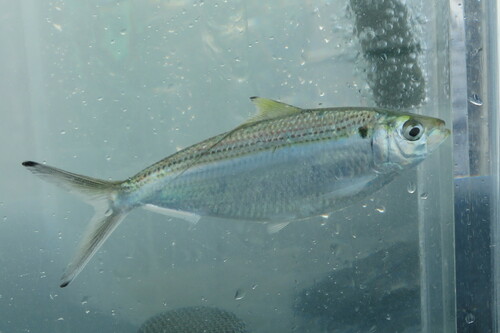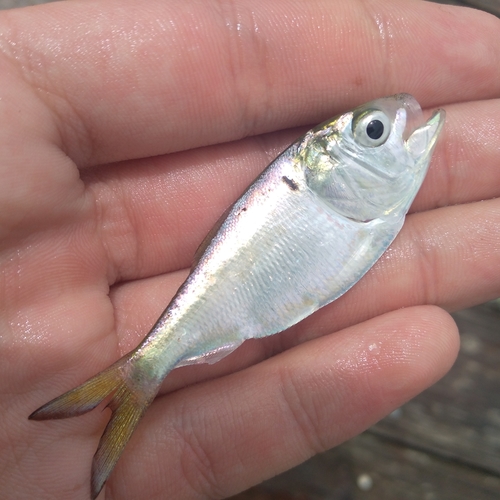
About Brevoortia patronus Goode, 1878
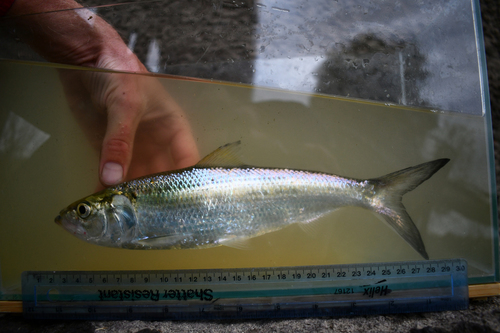
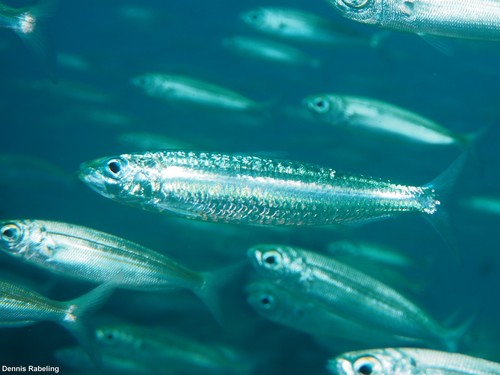
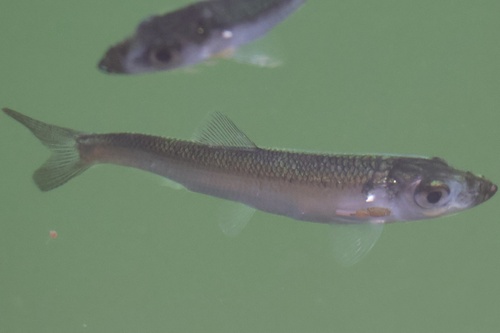
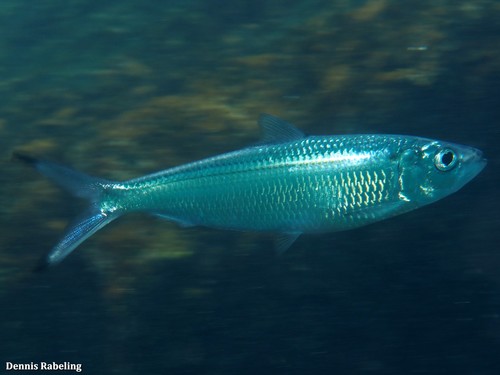
The Gulf menhaden (Brevoortia patronus Goode, 1878) is a small marine filter-feeding fish in the family Alosidae. Its range covers most nearshore waters of the Gulf of Mexico, excluding the extreme eastern Yucatan and western Cuba. Evidence from morphology and DNA analyses indicates that Gulf menhaden is the Gulf of Mexico counterpart to the closely related Atlantic menhaden (Brevoortia tyrannus). Both species support large commercial reduction fisheries; the Gulf menhaden fishery is the second largest in the United States by weight. Gulf menhaden lives throughout the Gulf of Mexico, but its distribution is uneven. The center of the species' distribution is the northwest and northcentral Gulf, especially off Louisiana and Texas, where populations are very large and abundant. In the southern Gulf of Mexico, the range of Gulf menhaden overlaps with that of the closely related finescale menhaden (Brevoortia gunteri), and resource partitioning (a process where closely related species living close together develop subtle differences in their ecological niches) has been documented between the two species. In the eastern Gulf, the range of Gulf menhaden overlaps that of yellowfin menhaden (Brevoortia smithi), and morphological and DNA evidence confirms hybridization between these two species. Gulf menhaden may also occur along the southern Atlantic coast of Florida, though this observation is based primarily on DNA evidence. Gulf menhaden spawn offshore during winter, between October and March. Their eggs and larvae are pelagic, and carried to estuarine nursery areas by prevailing currents. This stage can involve long migration distances, and populations of Gulf menhaden across the Gulf of Mexico are generally considered to form a single genetic stock.