About Breonadia salicina (Vahl) Hepper & J.R.I.Wood
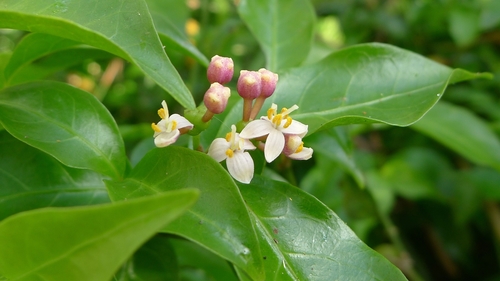
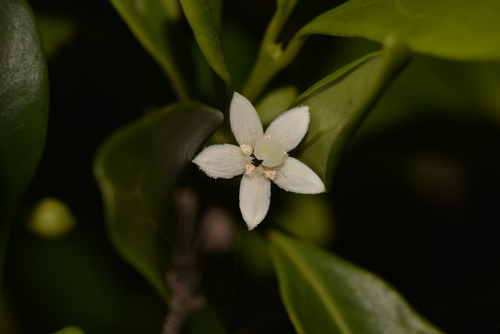
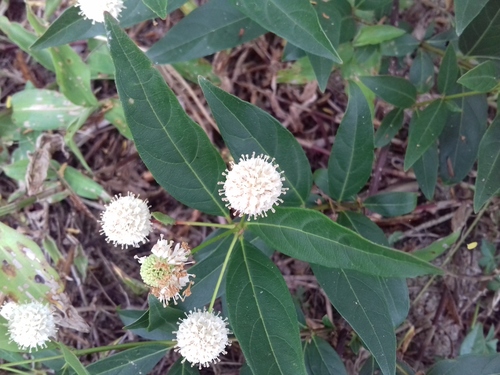
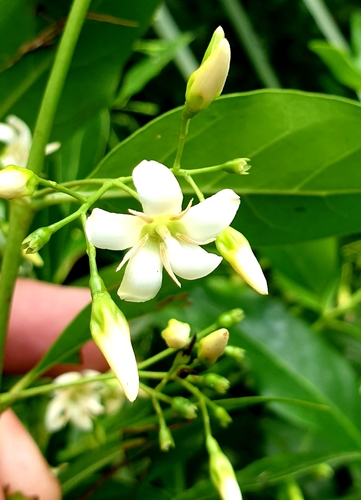
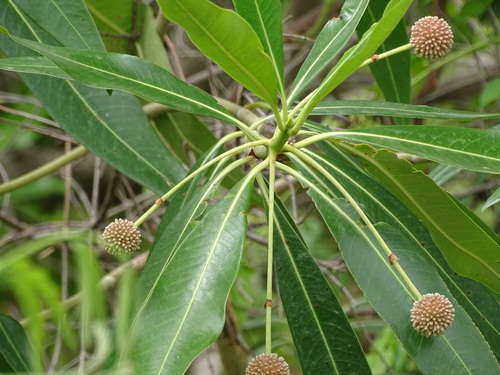
Breonadia salicina is a medium to large evergreen tree. Its leaves grow alternately or in whorls of 3 to 5. Leaves are generally lanceolate in shape with entire margins, have a leathery texture, are usually dark green with yellow colouring along the slightly raised midrib. This species produces small spherical clusters of capsule fruit, is monoecious, and bears small yellow flowers. Breonadia salicina grows in subtropical to tropical climates, occurring in small scattered populations ranging from South Africa to Saudi Arabia, and also in Madagascar. It can be found at elevations up to 2,000 meters above sea level, and most often grows on river banks or within stream water. This species is widely used in traditional medicine, and the whole plant is often used to treat conditions including arthritis and diarrhoea. One experiment found that leaf extracts of Breonadia salicina inhibit the growth of bacteria that cause food poisoning. In traditional African medicine, the bark is primarily used to treat diarrhoea and other stomach and digestive tract problems, while other plant parts are used for different purposes. The bark of Breonadia salicina is rich in tannins, which are polyphenols that reduce the growth of E. coli in the digestive tract. Leaf extracts of this species also reduce the activity of both gram-negative and gram-positive bacteria. It is thought that these antibacterial properties can be used for food preservation. Possible antifungal compounds have been isolated from Breonadia salicina, and these compounds have been shown to be active in protecting oranges from fungal infections.