About Brasenia schreberi J.F.Gmel.
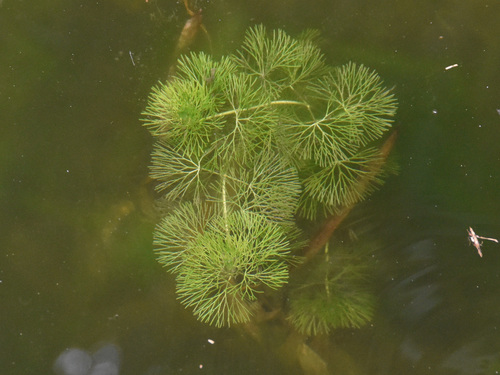
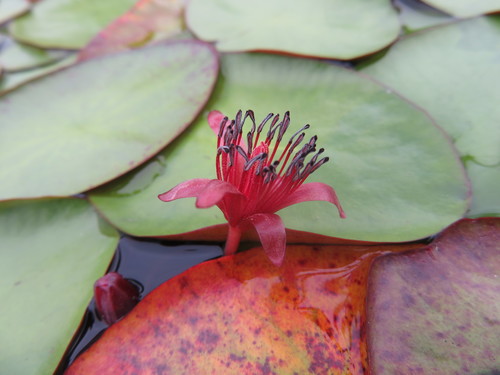
Brasenia schreberi, also known as Brasenia, is a plant species that relies on wind pollination. Its flowers follow a two-day blooming sequence. On the first day, the flower is functionally female (pistillate), extending above the water surface to expose its receptive stigmas, then recedes back below the water. On the following day, the flower emerges again as a functionally male (staminate) flower. It is held higher above the water than it was on the first day, and its anther-bearing filaments extend out beyond the female carpels. After the anthers split open to release pollen, the flower withdraws back under the water, where its fruit develops. This species is cultivated as a vegetable in China, where it is called chúncài 莼菜, and in Japan. In China’s Hangzhou region, it is a key ingredient in the famous local specialty West Lake Water Shield Soup. The mucilage produced by Brasenia schreberi has been found to have anti-algal and anti-bacterial properties, which may be useful as a natural form of weed control.