About Bradybaena similaris (A.Férussac, 1822)
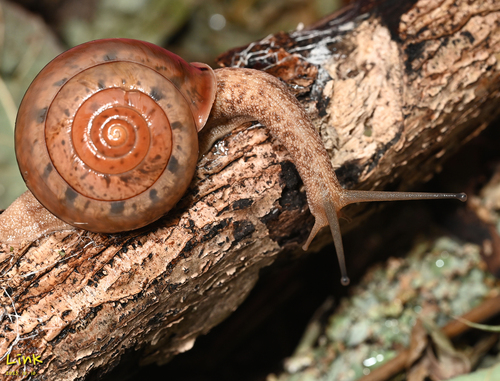
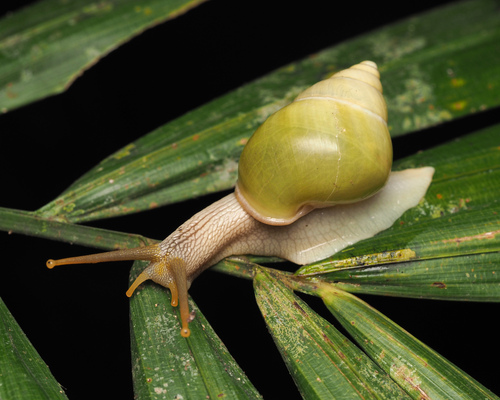
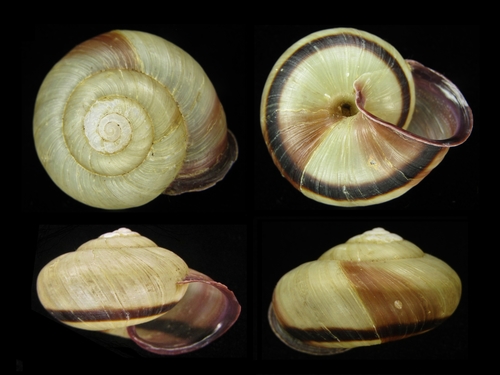
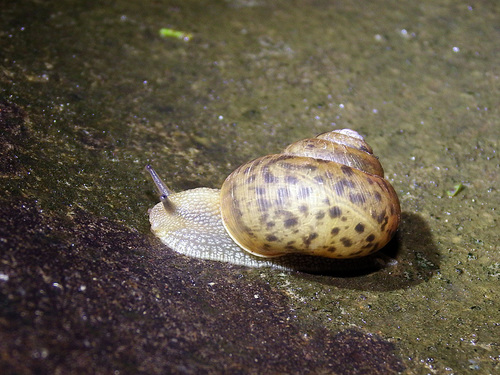
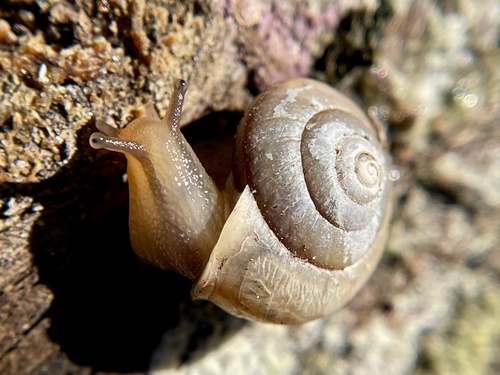
Bradybaena similaris (A.Férussac, 1822), commonly called the Asian trampsnail, has a shell that measures approximately 12 to 16 mm in width, with 5 and a half whorls. The shell is light brown, and often features a single apical chestnut band. Its surface is sculptured with fine, irregular growth lines and fine spiral striae. In adult individuals, the lip of the shell is reflected, and the columella partially covers the umbilicus. This species is native to Southeast Asia, and its native range specifically includes Pratas Island and Taiwan. It has been accidentally introduced to many regions across the globe. In the United States, it occurs in Gulf of Mexico states and is widespread in Florida. It has also become widespread in Eastern Australia, where it is usually found living in association with exotic weeds. Other introduced locations include Bermuda, Réunion, Mayotte, Mauritius, New Caledonia, Wallis and Futuna, and French Polynesia. As an introduced species, the Asian trampsnail is most often found in areas with tall grasses and high humidity. It commonly occurs in gardens, greenhouses, and similar habitats, and will sometimes retreat under logs or fallen branches. This species is often abundant, with large numbers of old shells accumulating on the ground, in leaf litter, on vegetation, and on trees. It becomes active after rainfall. Dundee and Cancienne have recorded that this snail can survive winters in Louisiana, where temperatures can drop as low as 5 to 10°C. This species feeds on a wide variety of plants, including citrus, and is classified as an agricultural pest. It is often accidentally exported from Florida to other regions, which creates a quarantine issue for the state. During mating, this snail species produces and uses love darts. Its eggs generally take 2 to 4 weeks to hatch, and the snail has a total lifespan of 2 to 3 years. The Asian trampsnail primarily eats live plant material, including growing vegetables such as arugula. Its feeding habits make it destructive to gardens and commercial crops. It has also been observed consuming coffee rust and the mycoparasite Lecanicillium lecanii.