About Brachyteles arachnoides (É.Geoffroy Saint-Hilaire, 1806)
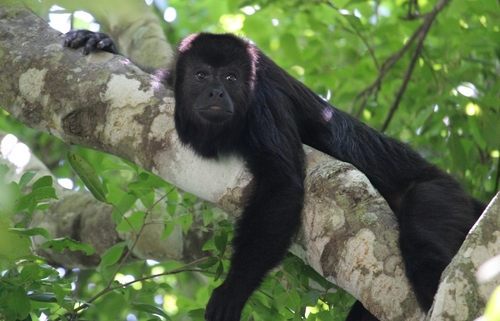
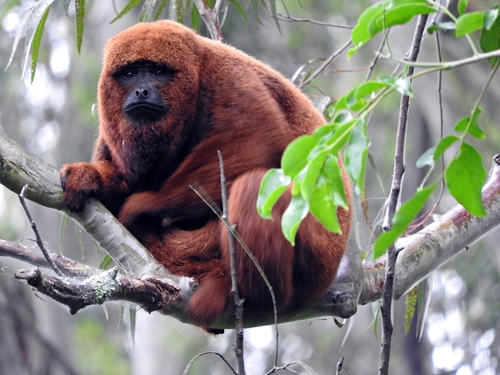
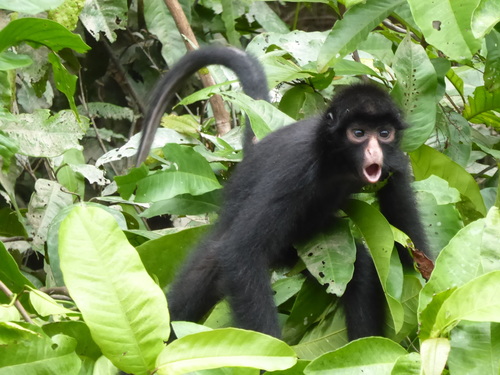
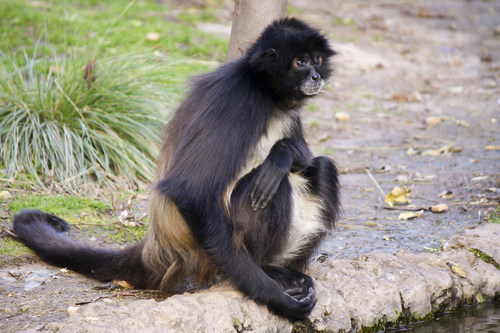
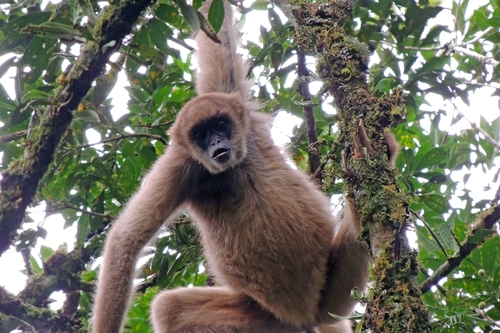
Brachyteles arachnoides, commonly called the southern muriqui, is the largest New World monkey and the largest native primate found in the Americas. This species shows clear sexual dimorphism in size: males have a head-body length between 55 and 78 cm (21.5–30.5 in), a tail measuring 74–80 cm (29–31.5 in), and a body weight ranging from 9.6 to 15 kg (21–33 lb). Females are smaller, with a head-body length of 46–63 cm (18–25 in), a tail length of 65–74 cm (25.5–29 in), and a body weight of 8–11 kg (18–24 lb). All southern muriquis have fully prehensile tails. This species can be distinguished from the closely related northern muriqui (Brachyteles hypoxanthus) by its facial coloration: B. arachnoides has a solid black face, while B. hypoxanthus has a black face mottled with pink. Today, southern muriquis only occur in restricted regions of the Atlantic rainforest in Brazil, South America, specifically within the Brazilian states of Paraná, São Paulo, Rio de Janeiro, Espírito Santo, and Minas Gerais. Local people in the region know this New World monkey as mono carvoeiro, which translates to "charcoal monkey".