About Brachystola magna (Girard, 1854)
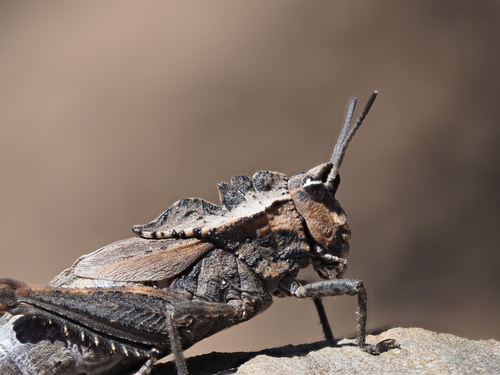
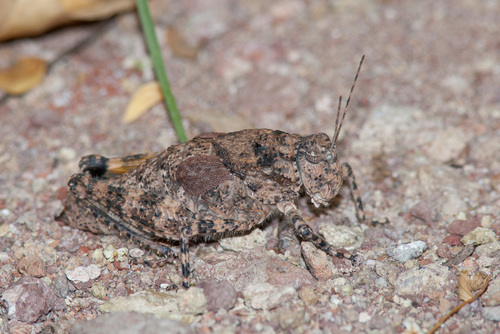
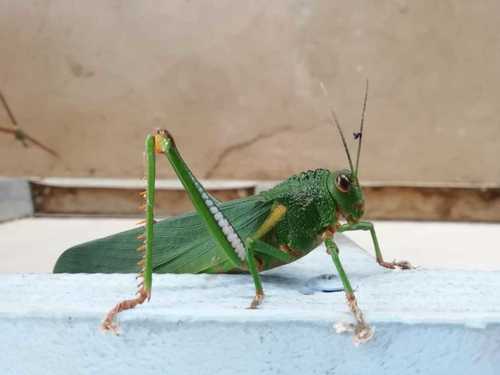
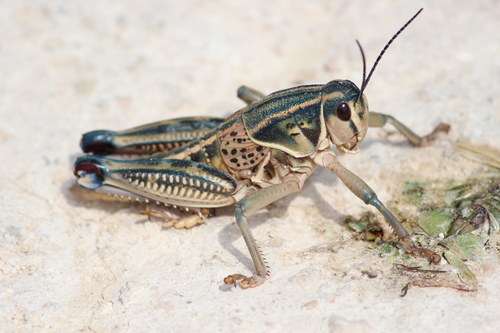
Brachystola magna, commonly known as the plains lubber grasshopper, western lubber grasshopper or homesteader, is a large grasshopper species belonging to the family Romaleidae. It is native to open and semi-open habitats across the central and southern United States and northern Mexico. In Wyoming, this species occurs on gravelly ground in the southwestern part of the state. Adults typically measure 4–6 cm (1.6–2.4 in) in length, and females grow larger than males. Most individuals are reddish brown with black dots on their outer wings, though there is natural color variation across the species' range: more northern variants tend to be greener, while southern variants are more brownish-buff. Brachystola magna has extremely small wings that leave it unable to fly. Its antennae are bluish-brown, and its legs are reddish close to the body, with purple tarsi. A distinct ridge runs along the upper and middle region of its abdomen. It can be distinguished from the related species Brachystola virescens by its longer antennae and differing coloration. This grasshopper does not cause significant damage to crops, and it prefers coarse broadleaved plants over crop species. It overwinters in the egg stage; eggs hatch in spring, and nymphs develop to reach adulthood by August. Walter Sutton's description of reduction division was based on studies of Brachystola magna spermatocytes, and this work was critical to the development of the chromosome theory of inheritance.