About Brachystegia spiciformis Benth.
The timber of Brachystegia spiciformis Benth. (msasa) has the characteristic strength associated with Msasa. Brachystegia spiciformis, commonly called msasa, is a tropical tree that grows best in open woodland with a sharp distinction between wet and dry seasons. The northern end of its range is near Tabora in Tanzania, at approximately 5° S, and its southernmost extent is near Quissico on the coast of Mozambique, just outside the tropics at approximately 25° S. Msasas require a minimum of around 500 mm of rain annually, though rainfall during the summer growing season is more important than total annual rainfall. It needs a mean annual temperature of around 19 to 20 °C. It does not thrive under combined cold and wet conditions, and like many tropical plants, it requires a hot dry period before the growing season begins.
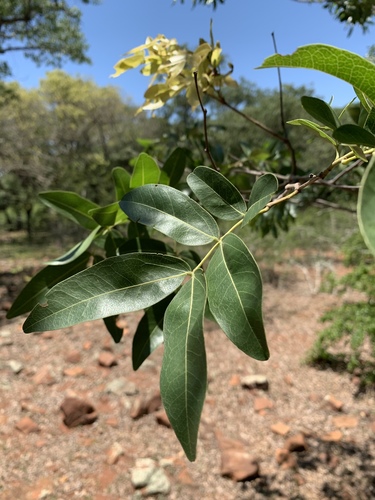
Ecologically, msasa is dominant across large areas of central Africa that receive sufficient summer rainfall. In many regions of Zimbabwe, Zambia, and Malawi, it is the dominant woodland tree, and its colourful spring foliage acts as a striking seasonal marker. It can tolerate light frost as long as little rain falls during the cool season, for example on the Mashonaland plateau, where it is often co-dominant with the similar mnondo, Julbernardia globiflora. Further north, it is less dominant but grows to its largest size. Msasa develops heavy spreading boughs and a shapely crown, so mature specimens are valued for planting in parks and gardens. However, it grows very slowly and is therefore seldom grown in cultivation.
Uses for msasa vary widely by region, matching how its appearance differs across its range. In regions where msasa trees do not grow very tall, the species is often heavily branched and used mainly for fuel, including charcoal and firewood. In other areas, such as central and northern Mozambique, it is used for furniture, railway sleepers, and construction timber. In parts of southern Tanzania, its hard wood is highly sought after. Additional uses include beehives, boats, and general construction, and it is considered an all-purpose wood. Furniture production from msasa has increased, since the wood can be artificially dried in kilns, which prevents further drying and twisting of processed wood. In southern Tanzania, B. spiciformis has several medicinal uses: the roots are used to treat dysentery and stomach problems. It is an important shade tree. Its leaves are known to be good fodder, and are considered likely to provide good mulch. This species is not nitrogen-fixing.