About Brachypelma hamorii Tesmoingt, Cleton & Verdez, 1997
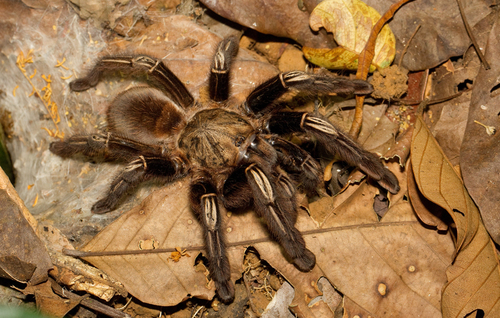
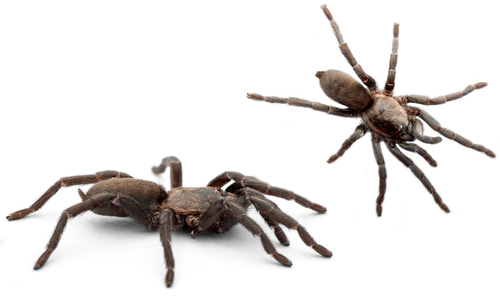
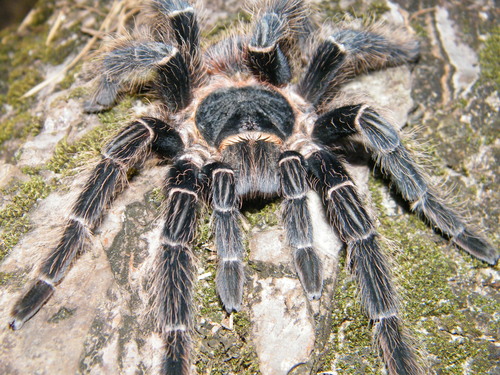
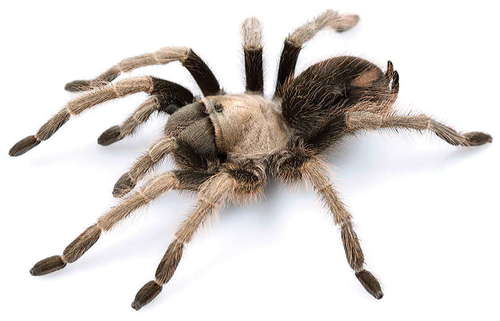
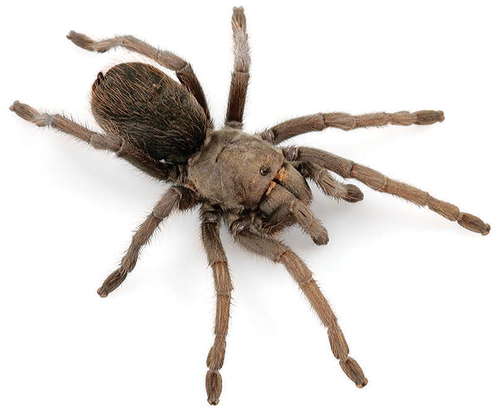
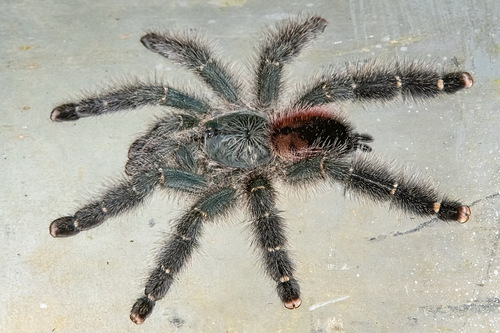
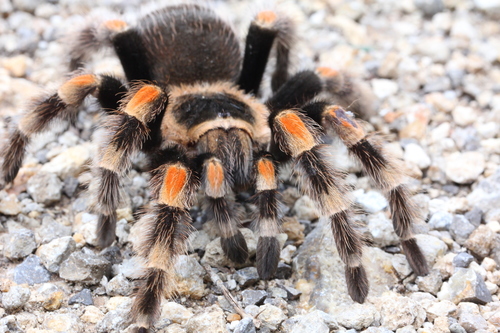
Brachypelma hamorii is a large species of spider. In a sample of seven females, total body length (excluding chelicerae and spinnerets) ranged from 52–54 mm (2.0–2.1 in). A sample of 11 males was slightly smaller, with total body lengths ranging from 46–52 mm (1.8–2.0 in). While males have slightly shorter bodies than females, they have longer legs overall. The fourth leg is the longest, measuring 75 mm (3.0 in) in the type male and 67 mm (2.6 in) in a female. The legs and palps are black to reddish black, with three distinct colored rings: deep orange on the portion of the patellae closest to the body, pale orange–yellow further out, pale orange–yellow on the lower part of the tibiae, and yellowish-white at the end of the metatarsi. Adult males have light greyish-red coloring around the border of the carapace, with a darker reddish-black marking extending from the middle of the carapace to the front of the head; the upper surface of the abdomen is black. Adult females show more variation in carapace color and pattern. Their carapace may be mainly black with a brownish-pink border, or the dark central area may be broken into a "starburst" pattern with pale orange–yellow covering the rest of the carapace. Brachypelma hamorii and the very similar Brachypelma smithi are both found along Mexico's Pacific Coast, occurring on opposite sides of the Balsas River basin where it opens to the Pacific. B. hamorii is found north of the basin, in the Mexican states of Colima, Jalisco, and Michoacán. Its natural habitat is hilly deciduous tropical forest. The species constructs or extends burrows under logs, rocks, and tree roots, among thorny shrubs and tall grass. A 1999 description of these burrows did not distinguish between B. hamorii and B. smithi. Deep burrows protect the spiders from predators like the white-nosed coati, and allow them to ambush passing prey. Females spend most of their lives in their burrows. Burrows are typically located in or not far from vegetation, and have a single entrance connected to a tunnel that leads to one or two chambers. The entrance is just slightly larger than the spider's body size. The tunnel is usually around three times the length of the tarantula's leg span, and leads to a chamber large enough for the spider to molt safely. A larger chamber, where the spider rests and eats prey, is located further down the burrow via a shorter tunnel. When the tarantula needs seclusion, for example while molting or laying eggs, it seals the entrance with silk, sometimes mixed with soil and leaves.