About Brachyglottis repanda J.R.Forst. & G.Forst.
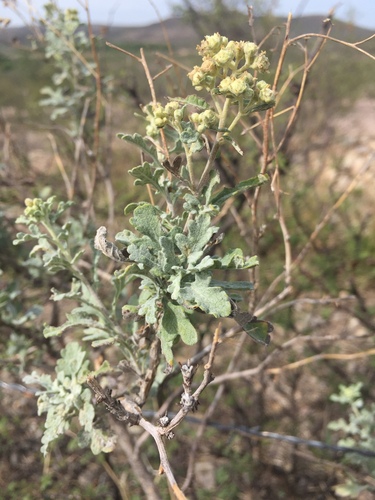
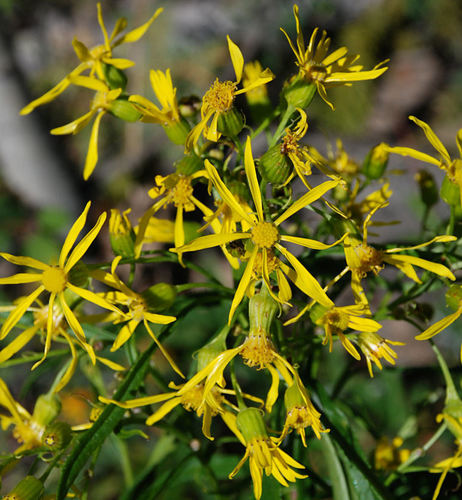
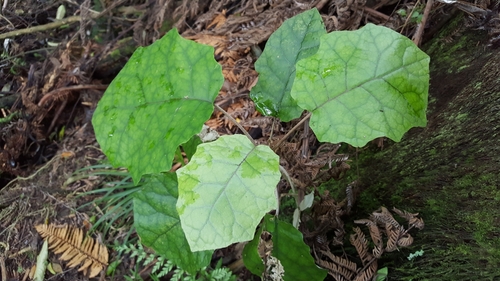
Brachyglottis repanda J.R.Forst. & G.Forst., commonly called rangiora, is a species of shrub or small tree that grows to around 6 metres (20 ft) tall and has corky bark. It produces leathery leaves that are 5–25 centimetres (2.0–9.8 in) long and 5–20 centimetres (2.0–7.9 in) wide, attached to 8–10 centimetres (3.1–3.9 in) grooved petioles. The leaf upper surface is pale green, while the underside is covered in dense tiny white hairs, making it white in color. It flowers from August to October, with dramatic panicle inflorescences that have 3 millimetres (0.12 in) long six-ribbed involucral bracts. Pseudanthia measure 5 millimetres (0.20 in) in diameter, and each inflorescence holds 10–12 yellow florets. Its seeds are oblong, 1–1.8 millimetres (0.039–0.071 in) long, with 2–3 millimetres (0.079–0.118 in) rough yellow pappus. It fruits from November to December, and disperses its seeds via wind. This species is endemic to New Zealand, growing in the North Island and the South Island as far south as Greymouth. It is often an early pioneer species in disturbed forest areas. B. repanda serves as a host for larvae of the moth species Stigmella cypracma; these larvae mine the leaves of B. repanda, leaving damaged leaves behind. Rangiora is poisonous, and has been linked to livestock poisonings and deaths. In Māori traditional cuisine, the plant's gum is used as chewing gum (and is not swallowed), or its leaves are used to wrap food cooked in a hāngī. Botanist and chemist Bernard Aston reported that honey made by bees from rangiora nectar is poisonous, so Māori never collected honey when this plant was in flower. Livestock, particularly horses, are affected by the plant's toxins. The toxins make affected animals appear drunk, stagger around and fall, often resulting in death. Rangiora is easy to grow from either seed or cuttings, though it may be short-lived and requires a hard prune after flowering. Early European settlers living or working in the bush used the leaves of this plant as emergency toilet paper. The reverse side of the leaves have also been used as notepaper.