About Brachygastra mellifica (Say, 1837)
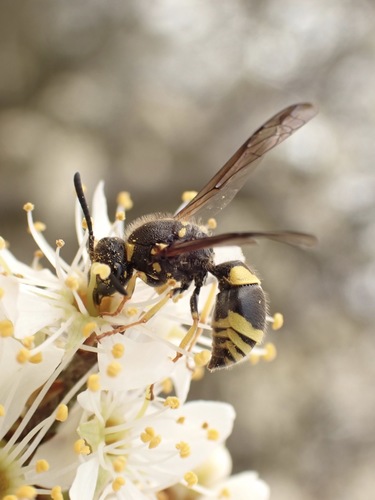
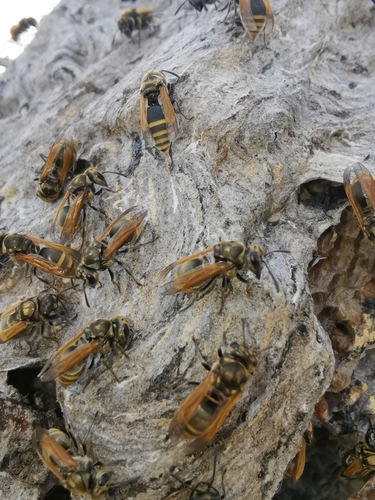
Brachygastra mellifica (Say, 1837), commonly known as the Mexican honey wasp, is a neotropical social wasp found in North America. It is one of the few wasp species that produces honey. In some Mexican cultures, it is considered a delicacy, and it is useful to humans for controlling pest species and pollinating avocados. The Mexican honey wasp ranges from northern Panama through most of subtropical Central America and Mexico, and also occurs in southeastern Arizona and the southernmost counties of Texas. It builds its nests 1 to 9 meters above the ground in the canopy of shrubs or trees, where the nests are well hidden by surrounding foliage. Nests are often found in suburban areas close to human habitation, and can be threatened by urban development, particularly in Texas. This species is used as a food source by the Popoloca people of Los Reyes Metzontla, Mexico, where B. mellifica is one of at least 17 insect species included in their traditional diet alongside other wasps. In Spanish, this delicacy is called "Panal Miniagua", and it is called "Cuchii" in the Popoluca language. People eat both the honey and larvae of B. mellifica year-round, but harvesting only takes place when the moon is between the last quarter and waning gibbous. Traditional knowledge and experience hold that nests contain the most honey and larvae during this lunar phase. The harvested honey and larvae are cooked and eaten with salsa and tortillas.