About Brachionycha nubeculosa Esper, 1785
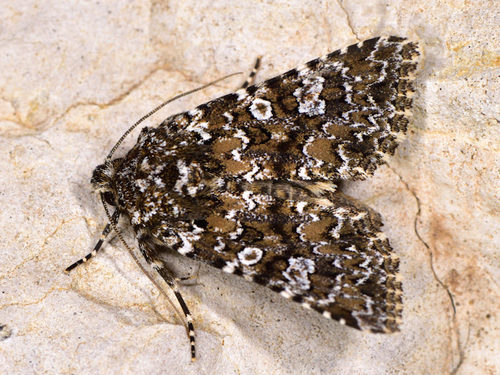
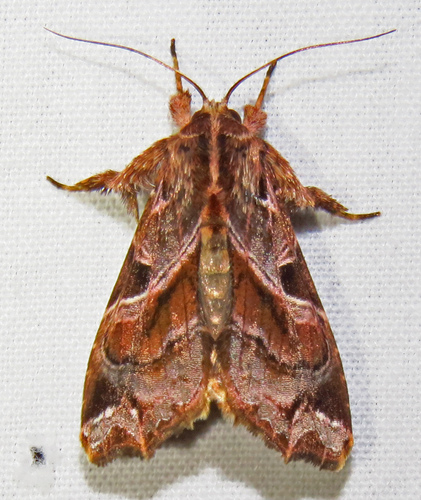
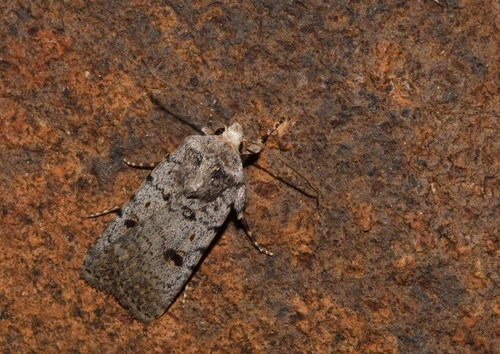
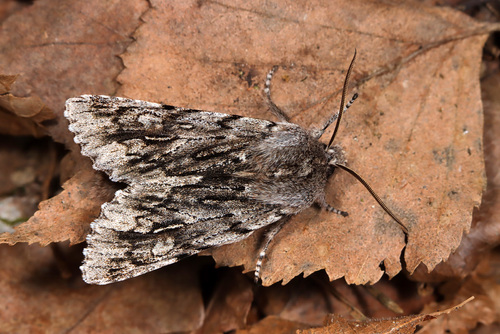
Brachionycha nubeculosa, commonly known as the Rannoch sprawler, is a moth species belonging to the superfamily Noctuoidea. This moth is distributed across the Palearctic realm. Its range extends west from the British Isles, through central and northern Europe, across Russia and Siberia, all the way to China. In central Europe, the species occurs only locally, but is often relatively common where it is found. In southern Europe, it is restricted to certain mountainous regions. In Germany, it can be found up to the summit areas of low mountain ranges. Brachionycha nubeculosa prefers moist conditions, and favors moist, cool temperate forests, mixed forests, wooded valleys, river and stream banks, as well as orchards. The wingspan of this moth ranges from 48 to 60 mm. Edward Meyrick gave the following description of the species: The forewings are pale brownish, mixed with whitish scales and heavily sprinkled with black. Veins are marked with blackish shading. The first, median, and second lines are dark fuscous. The reniform spot is whitish with black edging, and encloses two dark marks. The claviform spot is oval with black edging. The hindwings are whitish fuscous, with a dark fuscous discal spot and terminal dots. Full-grown larvae are pale yellow green, darker along the lateral sides. Their tubercular dots are pale yellow. There is a yellow oblique lateral streak on the 4th segment, and a yellow transverse streak on the 12th segment. The legs are more or less reddish. When at rest, larvae typically hold their anterior segments strongly curled back over the body, with the legs spread outwards. Adult moths fly from March to April. The larvae feed on the foliage of birch, willow, Populus tremula, Prunus padus, Lonicera xylosteum, Tilia, Rhamnus frangula, and Aster species.