About Brachidontes pharaonis (P.Fischer, 1870)
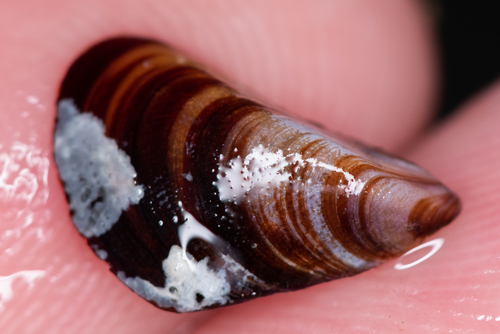
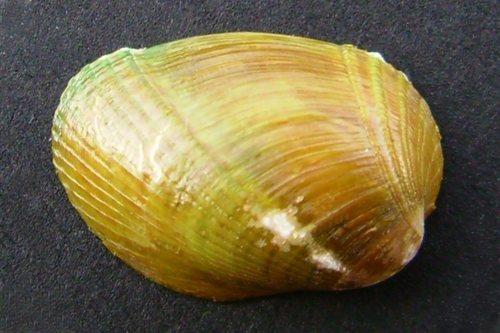
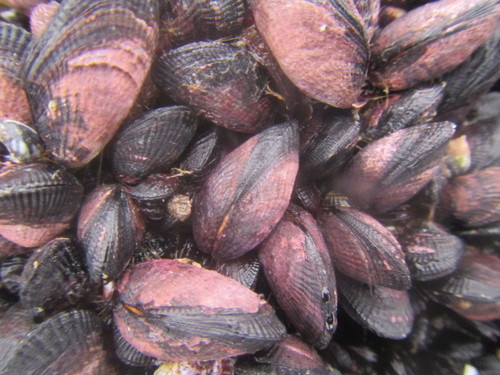
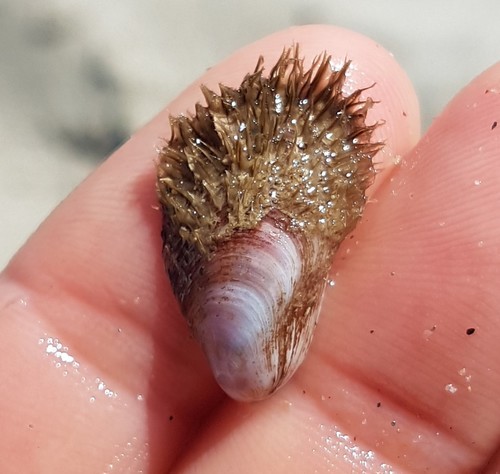
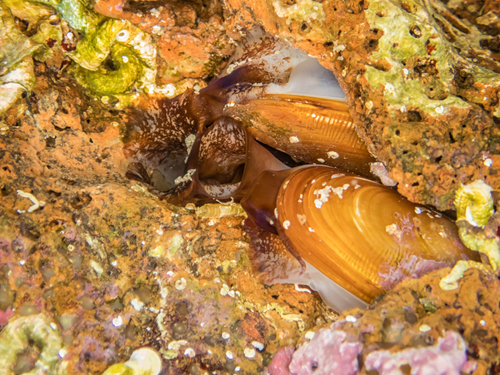
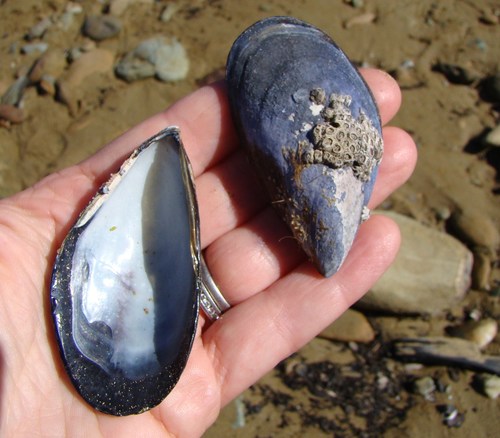
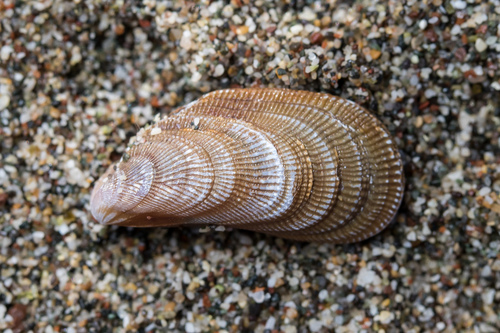
Brachidontes pharaonis (P. Fischer, 1870) is a small bivalve mollusc whose maximum shell length reaches 40 millimeters. The outer surface of its shell is dark brownish black, while the inner shell surface is purplish-black. The two shell valves are equal in size and similar in shape: they are elongated, asymmetrical, and connected by a dysodont hinge. The valve surface is marked by many fine, radial, bifurcating ribs that grow coarser toward the posterior end and create fine scalloping along the shell edge. The overall shell outline is mytiliform with a terminal umbo, though shell shape is highly variable. Some specimens are greatly expanded toward the posterior, occasionally curved, and some are nearly cylindrical with sub-terminal beaks. This species attaches itself to its substrate using thick byssus threads. Brachidontes pharaonis lives on rocky substrates and man-made structures in the intertidal zone. Within its invasive range in the Mediterranean Sea, it can tolerate a wide range of temperature variation, but low winter temperatures may suppress its physiological function. In the cooler waters of the western Mediterranean, B. pharaonis is limited to habitats with higher temperatures and salinities. In these areas, it forms dense mussel beds on hard substrates, particularly in locations sheltered from wave action. This species has separate male and female individuals. Adult B. pharaonis release sperm and eggs directly into the water column for fertilization. Its life cycle includes two larval stages: a trochophore stage that lasts approximately 24 hours, followed by a veliger stage that lasts several weeks before the larvae become competent to settle on a substrate.