About Botrypus virginianus (L.) Michx.
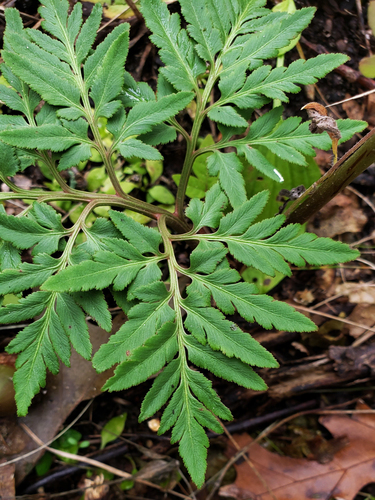
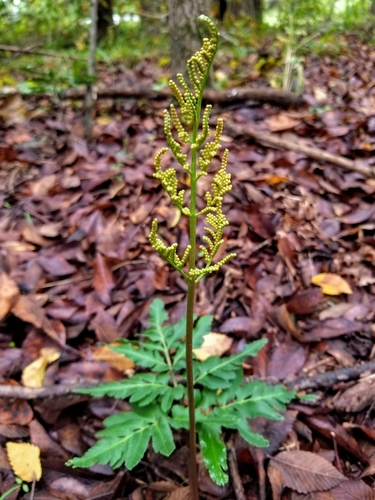
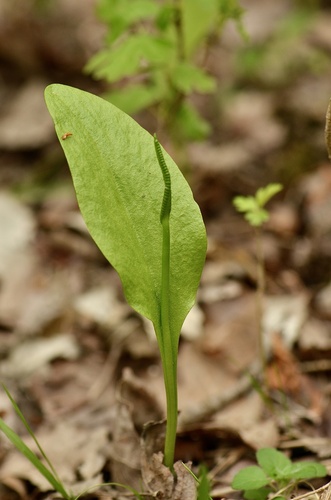
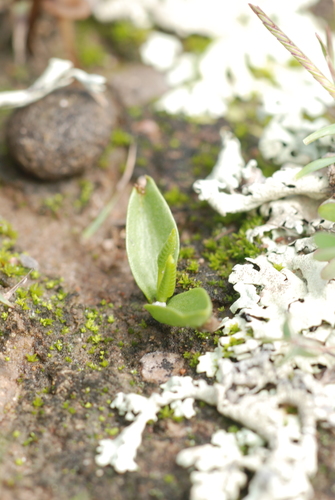
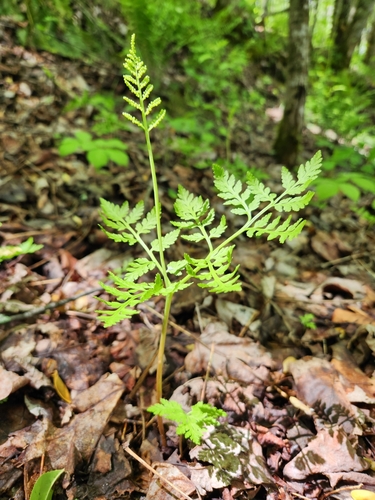
Botrypus virginianus (L.) Michx., commonly called rattlesnake fern, is a low-growing species that usually reaches one foot in height or less. Its single leaf emerges in early spring and senesces by late summer. The leaf is roughly triangular in shape, measures 15–50 cm across, and is held roughly parallel to the ground. It is 3-4 times pinnately compound, bright green in color, and has a soft texture. The stem is round and bicolored: pinkish or light tan at the base, and greenish closer to the leaf-bearing branches. The diploid chromosome number for this species is 184. Rattlesnake fern produces separate fertile and sterile leaves; when both are present, the sterile leaf grows from halfway up the stalk, while the fertile leaf grows at the tip. Spores are shed in late spring. Like other ferns, it undergoes alternation of generations, and the form described here is the sporophyte stage. This fern has a history of medicinal use, and it is still used to treat dysentery in India. It is a wide-ranging species: it is abundant across many parts of the United States, grows in the mountains of Mexico, Australia, and parts of Asia including the Himalaya Mountains, and occurs in Norway, the Karelia region of Finland and Russia, and around the Gulf of Bothnia. It is not found in any other parts of Europe. In the Himalayas, its large, succulent fronds are boiled and eaten. In the southern Appalachian Mountains, some wild ginseng hunters use Botrypus virginianus as an indicator species to locate ginseng root. This use has given rise to local common names that reference this role, including sang-find, 'seng sign, and 'seng pointer.