About Bothus pantherinus (Rüppell, 1830)
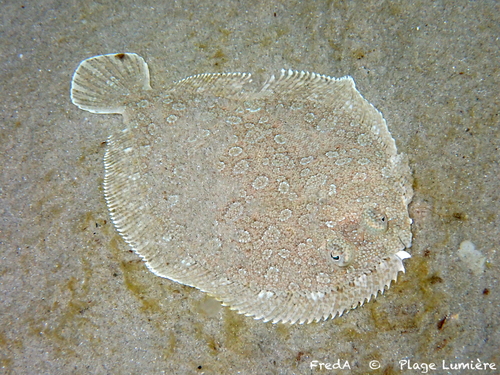
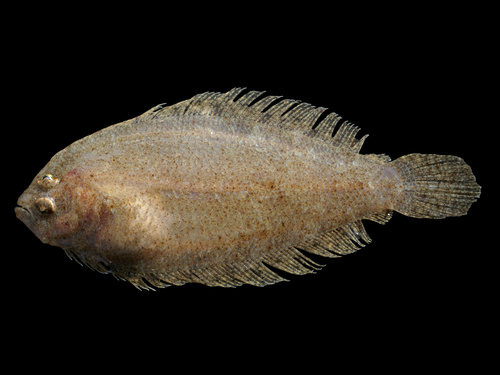
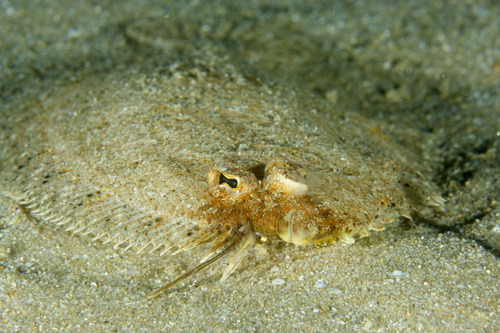
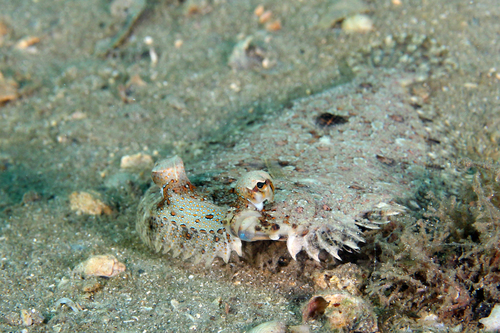
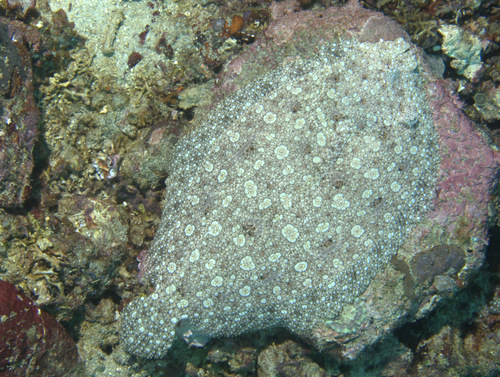
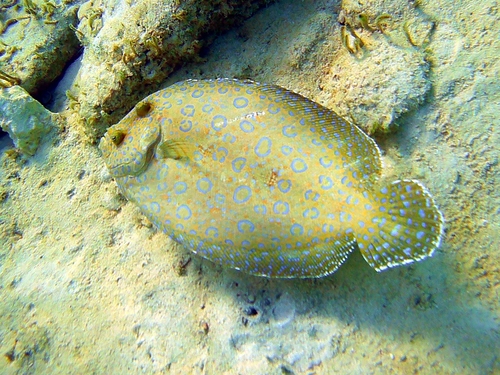
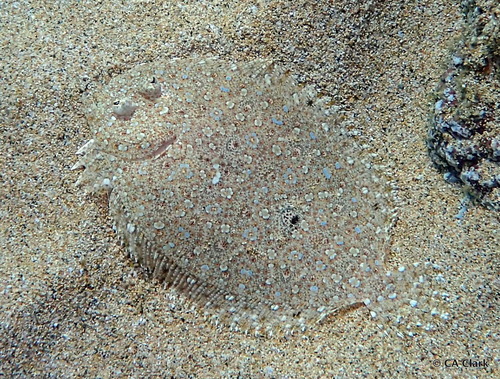
The leopard flounder, scientifically named Bothus pantherinus (Rüppell, 1830), is a species of lefteye flounder. Its body is highly compressed, and it reaches a maximum length of 39 centimeters (15 inches). As a lefteye flounder, its right eye has migrated to the left side of its body. The eyed side of the fish features dark spots, blotches, and ring-shaped markings, with one broader dark blotch located in the middle of the straight section of the lateral line. Males have an elongated pectoral fin that they use for signaling during courtship, territorial displays, and when alarmed. Leopard flounders use color change for camouflage: they take on a dull, spotted coloring to blend into rocky seafloors while waiting for prey to pass, and they turn an almost transparent color to avoid predators when swimming near the surface. Bothus pantherinus occurs from the Red Sea and Persian Gulf to South Africa, and ranges as far east as southeast Australia and north to Japan. It is a benthic species that lives on the sea floor, and it inhabits sandy, silty sand, and muddy bottoms of inner reef flats. It is often found partially buried in sand in lagoons, bays, and sheltered reefs, at depths between 3 and 150 metres (9.8–492.1 ft).