About Bothus mancus (Broussonet, 1782)
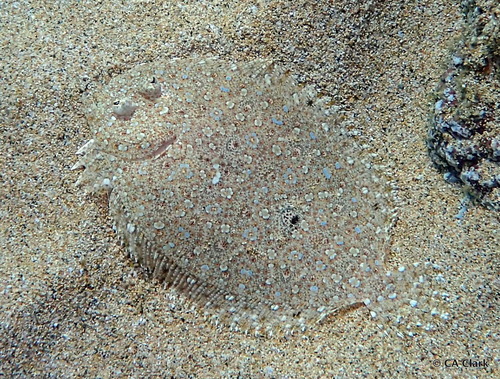
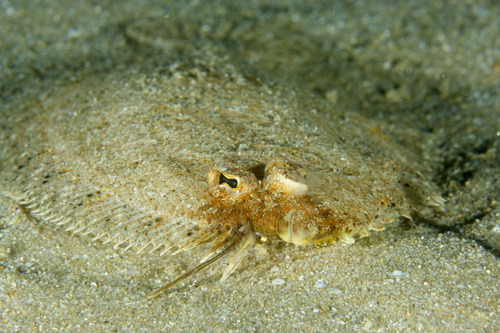
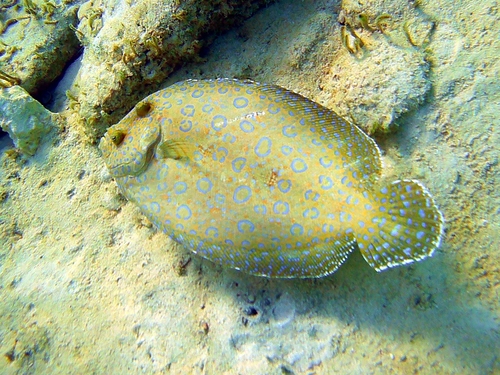
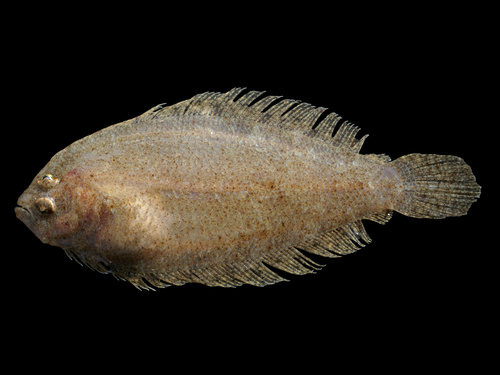
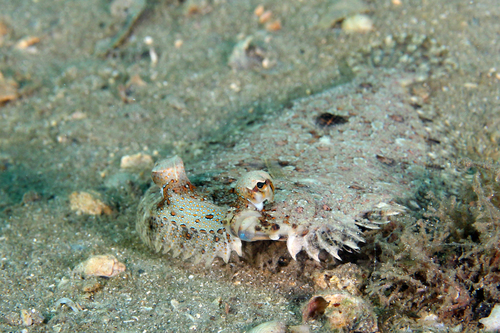
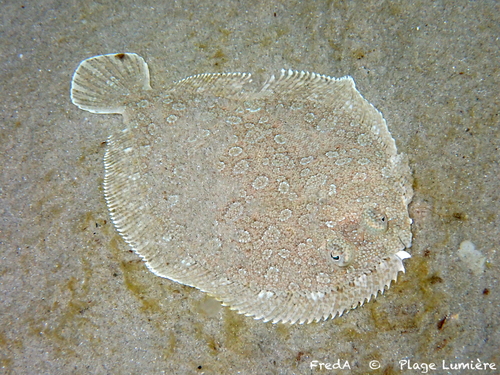
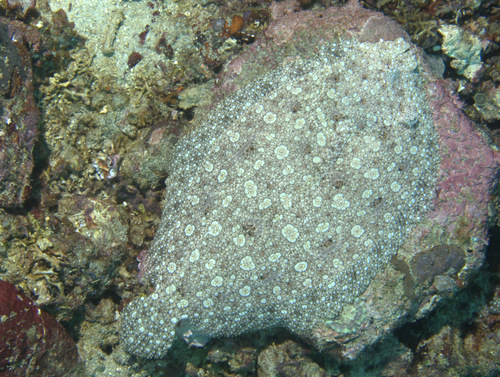
This species, commonly known as the peacock flounder or flowery flounder, gets its common name 'flowery flounder' from the flower-like bluish spots that cover its body. It is a member of the lefteye flounder family, meaning adult individuals have both eyes located on the left side of the head. The eyes are raised on short stumps similar to radar dishes, and can each move independently in any direction. This trait gives the flounder a very wide field of view, allowing one eye to look forward while the other looks backward at the same time. Newly hatched juvenile peacock flounders, like typical fish, have one eye on each side of the body and swim like other fish. As they mature into adults, the right eye migrates to the left side of the head, and the fish begin to swim sideways, allowing them to lie flat on the seabed. The maximum recorded body length of this species is approximately 45 centimeters (18 inches). Peacock flounders live primarily in shallow water over sandy bottoms. They may also rest on piles of dead coral or bare rock, and can be found at depths up to 150 meters (490 feet). Peacock flounders spawn in late winter and early spring. The female releases between two and three million eggs, which are then fertilized by males. Fertilized eggs initially float near the water's surface, carried by ocean currents, and hatch after 15 days. The eggs sink to the bottom just before hatching. After hatching, juvenile peacock flounders remain floating in the open ocean for four to six months, and can drift hundreds of miles from the location where their eggs were released and hatched. During this juvenile period, the right eye slowly migrates to the left side of the body.