About Bothrops leucurus Wagler, 1824
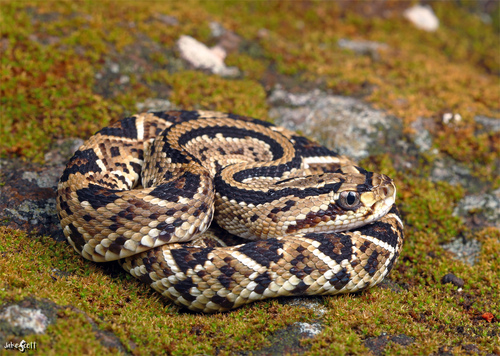
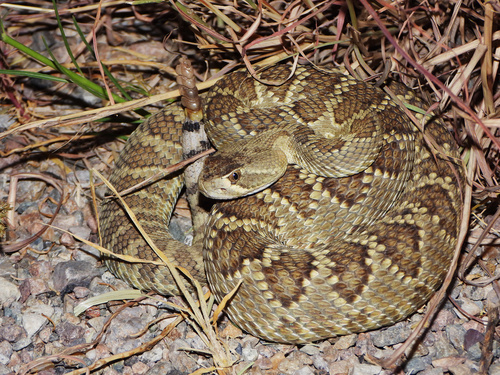
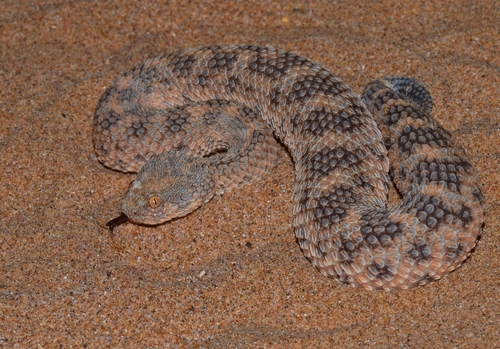
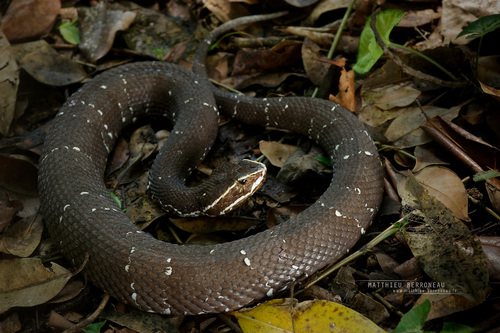
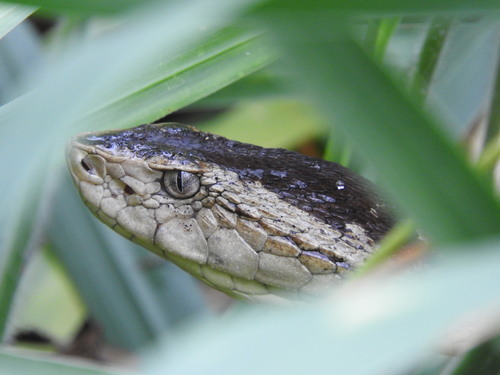
Coloration of Bothrops leucurus ranges from tan to reddish-brown. Its body pattern varies and includes darker and lighter spots, often resembling light diagonal dorsolateral lines. This snake has 23 to 31 rows of dorsal scales across the midsection of its body. The belly is yellowish or whitish, marked with dark brown or gray spots, and additional irregular spots appear along the sides. This is a terrestrial species, with an average total length ranging from 250 to 1840 mm. It occurs primarily in forests as well as arid, semi-arid, dry, humid and sub-humid regions, and can be found in both urban and rural areas. This species is distributed along the Atlantic coast of eastern Brazil, extending from northern Espírito Santo north to Alagoas and Ceará. It also occurs further inland in multiple parts of Bahia. The identity of disjunct populations located west of the Rio São Francisco is uncertain. Its type locality is listed as "provinciae Bahiae". Bothrops leucurus is viviparous. It has a four-month gestation period, with an average litter size of 19 young. Birth takes place between winter and summer.