About Boopsoidea inornata Castelnau, 1861
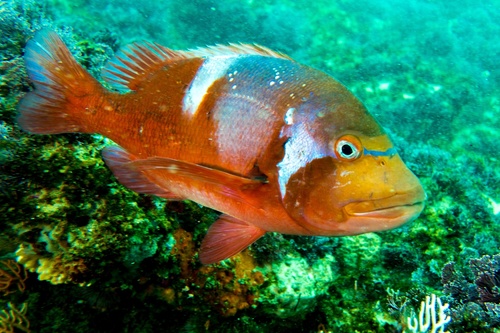
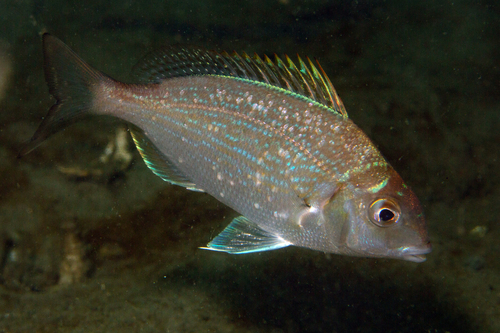
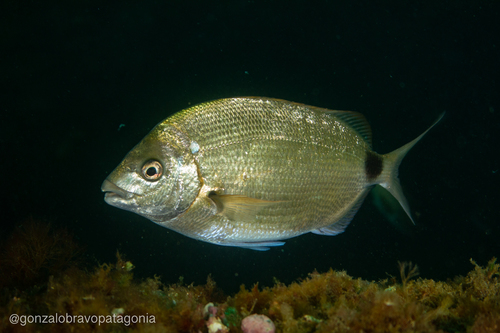
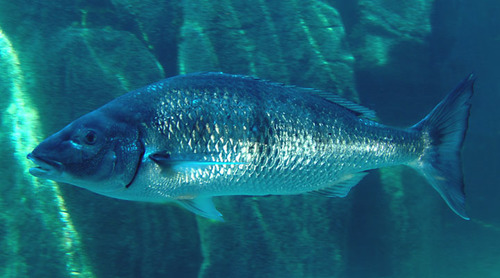
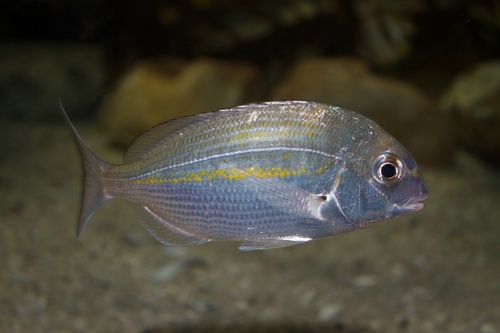
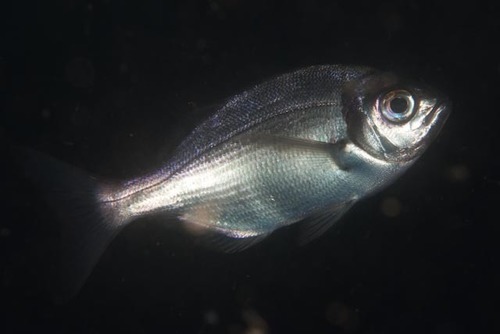
Boopsoidea inornata Castelnau, 1861 is a deep-bodied fish with a pointed head and large eyes. Adult individuals have a body color ranging from bronze to silver, with a distinct dark edge along the gill covers. Small juvenile fish are reddish orange; this color fades as the fish grows, turning silvery with orange to yellow fins. This species grows up to 30 cm in length, and its weight rarely exceeds 0.4 kg. It is endemic to the southwestern Indian Ocean off the coast of South Africa, ranging from Kalk Bay on the eastern coast of the Cape Peninsula to Aliwal Shoal in KwaZulu-Natal. It typically lives on rocky reefs at depths between approximately 5 and 35 m, and prefers a temperature range of 17.6 to 27.5 °C. B. inornata is omnivorous, and prefers small prey that live on sand and reef. It consumes relatively small amounts of algae and small fish. Adult individuals feed on tunicates, polychaete worms, crustaceans including amphipods, decapods, isopods and mysids, molluscs, bryozoans, plankton, and seaweeds for the animal encrustations growing on them. This species is a rudimentary hermaphrodite. It is long-lived, polygamous, and a resident species. Females spawn year-round, with the majority of spawning occurring in spring. The eggs are pelagic, and have been recorded in shelf waters within Tsitskamma National Park. Females reach maturity at a fork length of 178 mm, while males reach maturity at 185 mm fork length. B. inornata is preyed on by large fish such as red steenbras and kob. Nineteen different parasite taxa are known to infect this species, including representatives of myxozoans, monogeneans, digeneans, cestodes, nematodes, copepods, and isopods.