About Bombus vestalis (Geoffroy, 1785)
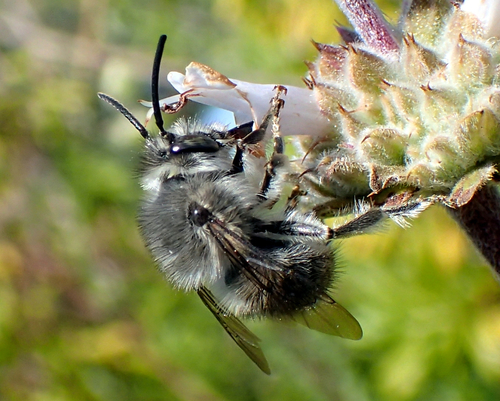
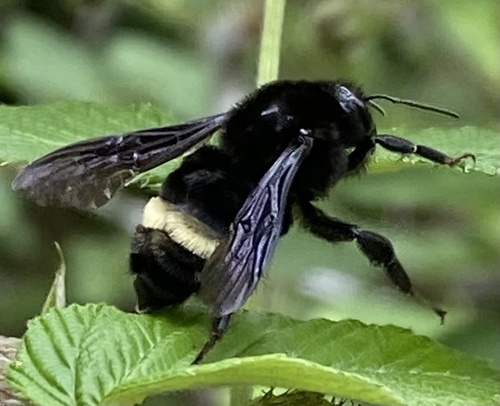
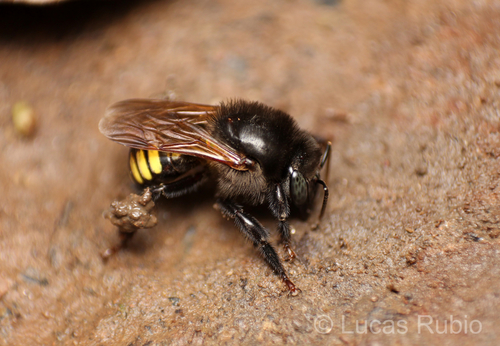
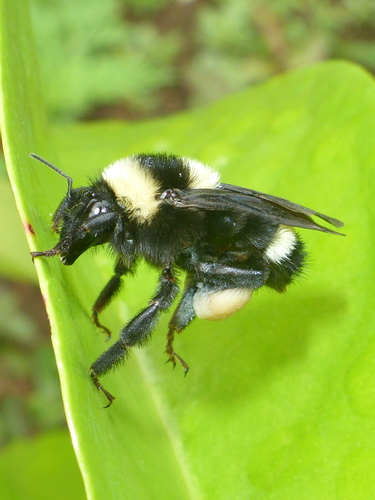
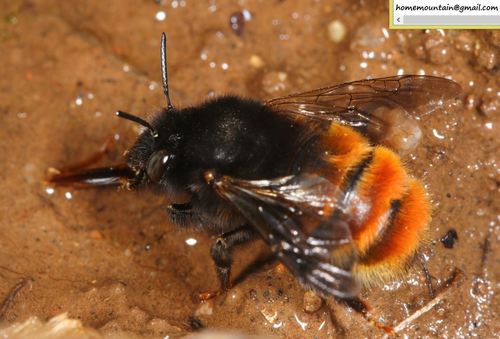
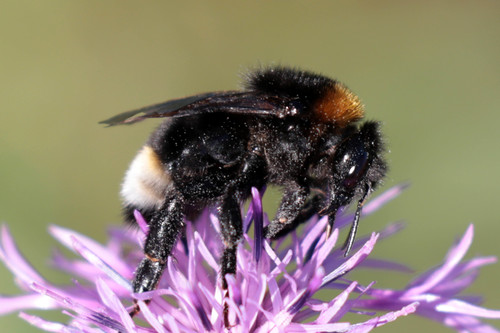
This species is the cuckoo bumblebee Bombus vestalis. Queens are large, reaching up to 21 mm in body length with a 35 mm wingspan, while males are considerably smaller at 16 mm in body length. The species is predominantly black, with an orange collar. The third abdominal tergite has a border of yellow hairs, and the hairs on the fifth tergite are mostly white. Males share the same color pattern as females, but are smaller and have longer antennae. It looks very similar to the related cuckoo bumblebee Bombus bohemicus, and can only be distinguished by the length of its antennal segments or by dissection and comparison of its genitalia; in Bombus vestalis, the fifth antennal segment is the same length as the third and fourth segments combined. A key identifying feature of Bombus vestalis is the absence of corbiculae (pollen baskets) on its hind legs. This trait is evolutionarily associated with its cuckoo lifestyle: B. vestalis does not build its own nests or collect its own resources. Females have larger bodies and poor foraging skills, and are adapted to take over existing nests of other bumblebee species, using the host colony's workers to collect pollen. Bombus vestalis ranges from North Africa in the south to southern Sweden in the north, and from Ireland in the west to northern Iran in the east. It is common throughout England and Wales, and has only been recorded in Scotland since 2009. Data from the National Biodiversity Network gateway shows it is most abundant in south-east England. In Ireland, the species was thought to be nearly extinct in the 20th century, with the last recorded sighting in 1926 in Carlow, but a population was rediscovered in 2014 in the walled garden at Saint Enda's Park in Rathfarnham. As a cuckoo bumblebee, Bombus vestalis does not build its own nest. Instead, it usurps nests of Bombus terrestris: it kills the host queen and forces the host workers to raise its own offspring. Males often gather in suburban gardens. Queens emerge early in spring, while males emerge later, between late May and early June. It feeds on nectar from a variety of flowering plants, including clover (males particularly often visit white clover), tufted vetch, knapweed, and others. Newly emerged queens in spring frequently visit flowers such as deadnettles, sallows, blackthorns, and dandelions. The life cycle of Bombus vestalis depends entirely on its host species, B. terrestris. Host B. terrestris begin colony growth in early spring, slowly building up their nest. Female B. vestalis hibernate until April, after the host colony has already produced its first generation of workers. At this point, the host nest is an ideal size for a female B. vestalis to take over. When invading the nest, B. vestalis females establish dominance over the host workers over the first few days without immediately killing the host queen. It takes nearly a month for B. vestalis to fully take over the nest and raise its brood.