About Bombus transversalis (Olivier, 1789)
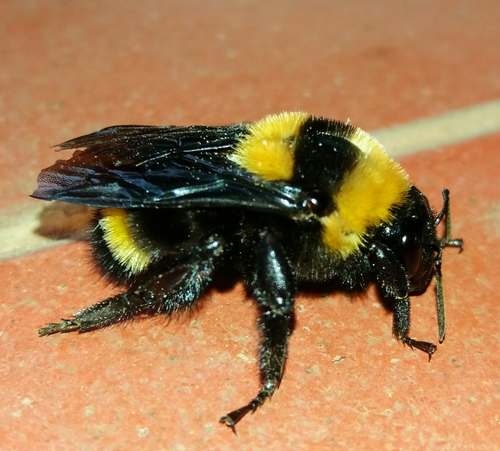
Bombus transversalis (Olivier, 1789) is a bumblebee native specifically to the Amazon Basin. It is most well known for its surface-level colonies, which workers construct on the rainforest floor. Unlike its close relatives, B. transversalis can thrive in humid climates and defend against a wide range of predators, thanks to its resilient nests. A substantial amount of information is already available about this species' nests and foraging abilities, but more research is needed to understand colony internal relationships and the bee's full life cycle. This bumblebee is primarily found in the lowland tropical rainforests of the Amazon Basin, across much of South America including parts of Peru, Ecuador, and Brazil. It is recognized as a characteristic colonizing bumblebee of Neotropical rainforests, and is adapted to survive in humid climates that see heavy rainfall year-round. Its nests are built in non-flooded soil, usually placed next to tree roots or among shrubs to gain structural support. Most other Bombus bumblebees live in temperate climates and cannot tolerate the humidity and heat of the tropics, but B. transversalis has evolved adaptations to these conditions. Its nest features an interwoven canopy that covers the entire colony, allowing the bees to stay dry even during intense Amazon rainstorms. A properly built canopy creates a small air gap between the canopy and the colony's brood. This gap insulates the colony and stabilizes internal moisture levels. If a colony is weak, moisture can enter this air gap and lead to mold growth. Additionally, researchers think that during periods of peak midday heat, worker bees will position themselves at the colony entrance and fan the nest to lower internal temperature and humidity.