About Bombus sitkensis Nylander, 1848
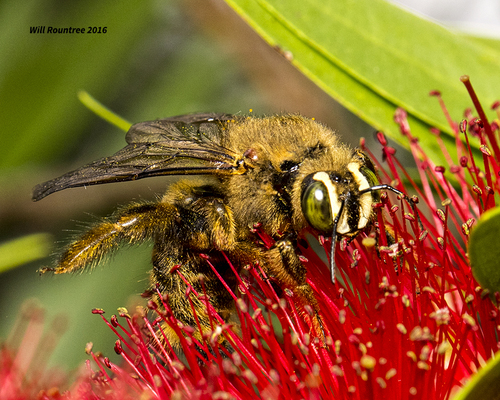
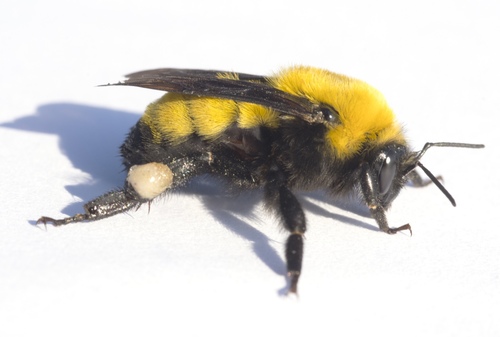
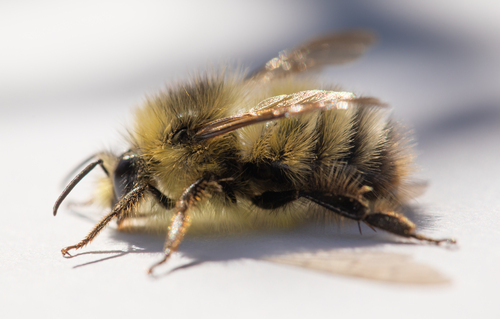
Commonly known as the Sitka bumblebee, Bombus sitkensis Nylander, 1848 has an oblong head and a medium-length proboscis. In females, including queens and workers, the face and anterior thorax are covered with intermixed black and yellow hairs, with a distinct black patch in the center of the thorax and yellowish sides. Their abdominal segments (terga) 1 and 2 are yellow, while terga 3 and 4 are black; terga 3 and 4 also have a yellow posterior rim. The two final abdominal segments are brownish-red. Males have yellow coloring on the face and anterior thorax, with only the posterior thorax being darker, covered in intermixed black and yellow hairs. On the male abdomen, terga 1 and 2 are yellow; terga 3 to 5 are yellow on the anterior portion and black on the posterior portion. The male tail, made up of terga 6 and 7, is brownish-red. This species is a common bumblebee native to western North America, ranging from Alaska and British Columbia south through Washington to northern Idaho, western Montana, and coastal regions of California. Sitka bumblebee populations have experienced mild declines in California parks, caused by competition for nesting sites like rodent holes with the yellow-faced bumblebee, B. vosnesenskii. Sitka bumblebees forage on flowering plants from a number of plant families: Ericaceae, Asteraceae, Saxifragaceae, and Rhamnaceae. Queens have an unusually long flight period, running from the end of January to the beginning of December. The first worker bees emerge in early March, while males emerge in early April. Both workers and males have disappeared from the population by the end of September.