About Bombus melanopygus Nylander, 1848
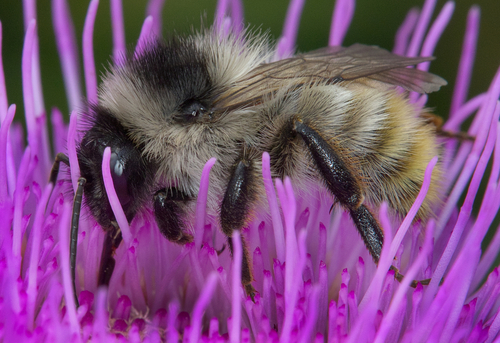
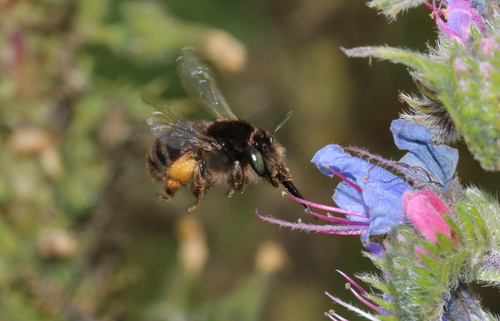
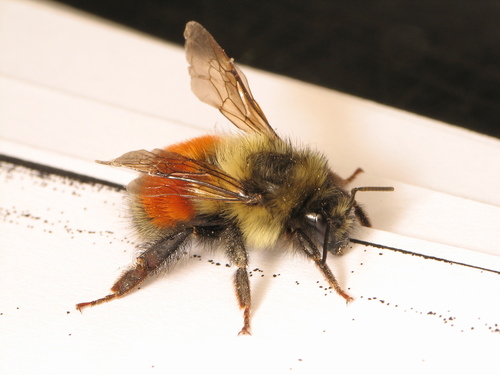
Bombus melanopygus Nylander, 1848, commonly known as the black-tailed bumble bee, black tail bumble bee, or orange-rumped bumblebee, is a bumblebee species native to western North America. It is widely distributed across the region, ranging from the Pacific Coast to the Rocky Mountains, and extending from Alaska down to Baja California. There are two distinct color forms of this species. The red form, scientifically named Bombus melanopygus melanopygus and informally called "red butts", occurs primarily at higher latitudes starting from northern Oregon and extending further north, as well as in the Mountain West. The dark color form, Bombus melanopygus edwardsii, is most common in California and southern Oregon. In northern populations, the second and third abdominal segments are red, while in southern populations these segments are black. Individuals with black segments were previously classified as a separate species, Bombus edwardsii. Genetic analysis has since confirmed that the two forms belong to the same single species, and Bombus edwardsii is now treated as a synonym. This bumblebee can successfully use a wide variety of habitat types, including both agricultural and urban areas. It is noted as "one of the few bumblebees still found regularly in San Francisco". It forages on many different plant genera, including manzanitas, Ceanothus, goldenbushes, wild buckwheats, lupines, penstemons, rhododendrons, willows, sages, and clovers. It builds nests either underground or aboveground inside pre-existing structures. This species is known to act as a host for the zombie fly, Apocephalus borealis.