About Bombus frigidus Smith, 1854
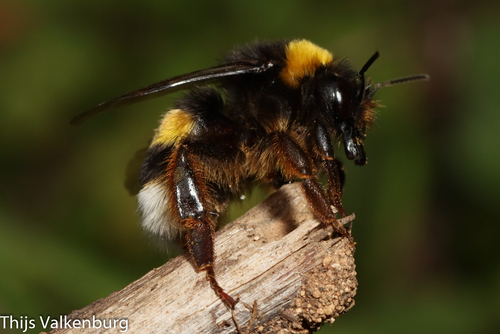
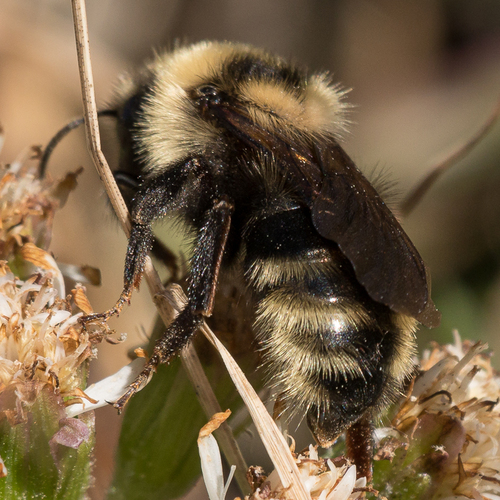
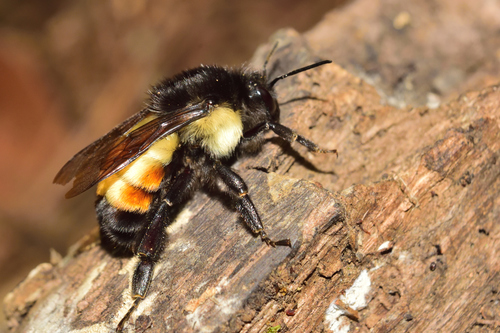
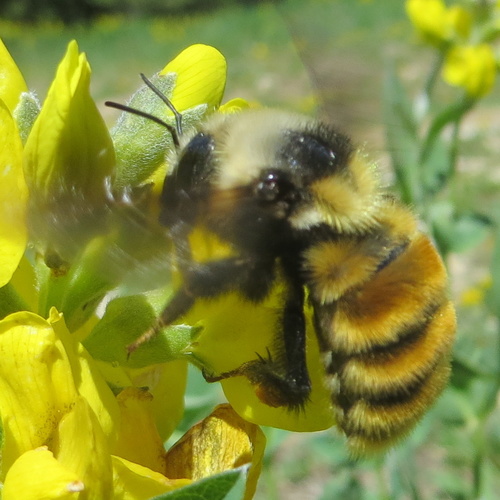
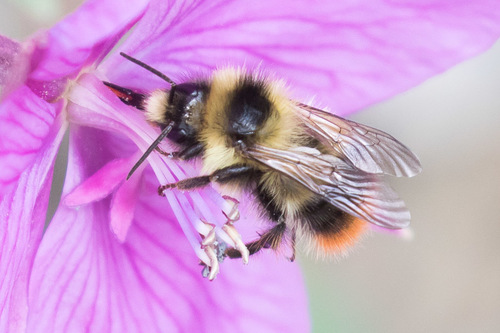
Bombus frigidus, first formally described by Smith in 1854, has distinct physical characteristics. It has a yellow thorax and yellow first and second dorsal abdominal segments (abbreviated T1–T2, where T1 sits closest to the division between the thorax and abdomen). A black band runs between the wings, though this band may be absent in some males. The fourth and fifth dorsal abdominal segments (T4–T5) are orange or yellow. Female individuals have entirely black facial hair, while male facial hair can be either black or yellow. The corbicular fringe, the pollen-carrying structure located near the back of the bee, is pale orange. All individuals have long body hair, and males are approximately half the size of queens. Leg hair is black for both sexes. This is a rare bumblebee species, with a confirmed distribution ranging from Alaska to the eastern shore of Canada, and extending as far south as Colorado. There are incorrect published reports of sightings in California, Ohio, Tennessee, North Carolina, and Virginia. Bombus frigidus is an arctic-adapted bee that inhabits cold environments at high latitudes or high elevations. Colonies are established either in small burrows or directly on the ground. Even though the species is rare, its populations are not declining like those of many other bumblebee species, and it holds a global conservation status of Least Concern.