About Bombus bohemicus Seidl, 1838
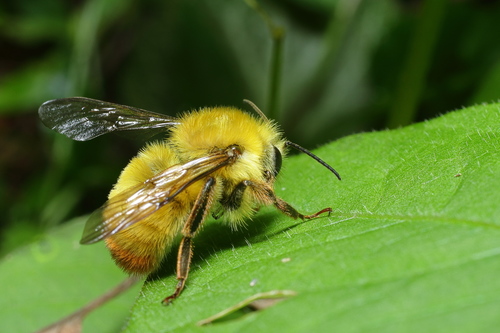
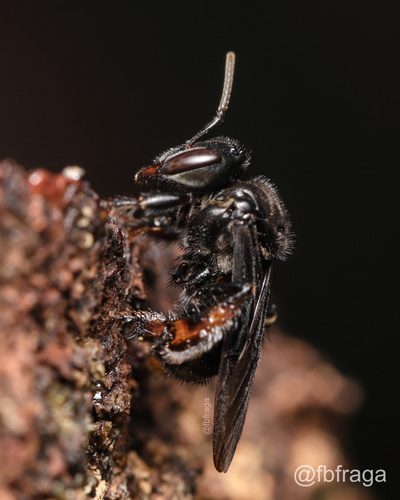
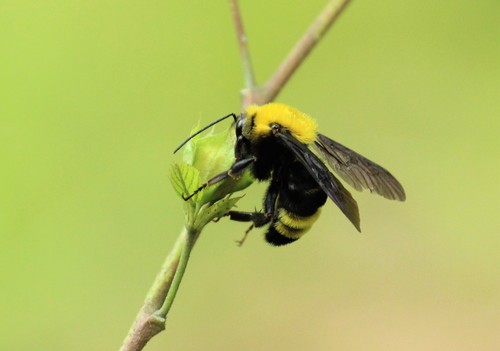
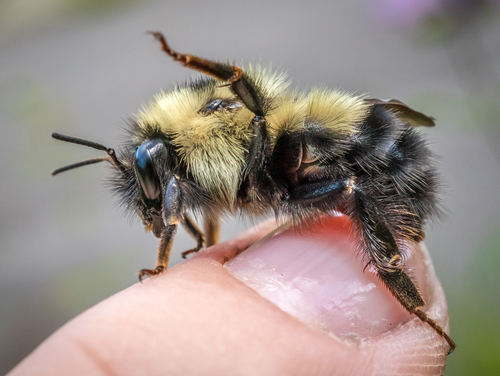
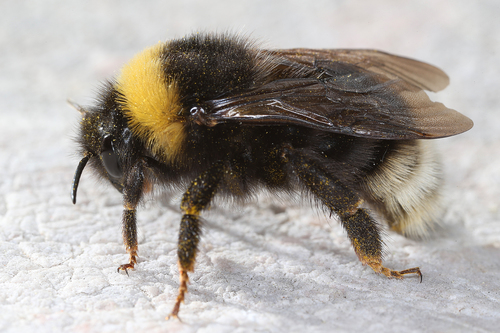
Description: Queens of Bombus bohemicus measure approximately 15–20 mm in body length, and have a round face with a short proboscis. The hair on their face and head is black, and they have a pale yellow collar that usually has no intermixed black hairs. Most of the abdomen is black; it often has yellow hairs on the first abdominal segment (first tergite), pale yellow sides on the third tergite, and a white or pale yellow tail end. Males found in northern Scotland may sometimes have yellow tails instead of white. The key defining physical difference between B. bohemicus and non-cuckoo bumblebees is that B. bohemicus lacks corbiculae (pollen sacks) on its posterior tibia; the area is instead covered in dense hair. Compared to its host species, female B. bohemicus have very thick cuticles, longer and more powerful stings, and larger venom sacs and Dufour's glands. Males are smaller, at around 11–17 mm in length, and have similar coloration to females. Males are stingless. B. bohemicus does not produce any worker bees, and instead enslaves host workers from parasitized nests. This species also does not perform any nest-building behavior; instead, it enters newly established host nests and overthrows the original host queen to take over the nest. B. bohemicus parasitizes three specific host species: Bombus lucorum, Bombus cryptarum, and Bombus terrestris. Distribution and habitat: B. bohemicus is one of the most common cuckoo bumblebees in Europe. It is distributed across most of Europe, ranging from inside the Arctic Circle down to northern Spain and Greece, and from Britain and Ireland in the west to eastern Russia in the east. It is also found in Turkey. Within Britain, it is common on the southwestern peninsula, in northern England, and in Scotland. It is rare in southeastern Britain, with the exception of the East Anglian brecks. B. bohemicus lives in temperate climates, and occupies the same temperate habitats as its host bee species, which gives it easier access to host nests. However, it differs from its host species in preferred flowers for foraging. This difference is likely because B. bohemicus forages only for nectar, and has different foraging timing over its life cycle compared to its hosts. It prefers to forage on scrub-type flowering plants. Analyses of population densities for both host bees and B. bohemicus show there appears to be a threshold host population density that allows the parasite to maintain a persistent population. This threshold has not been accurately measured, but areas with low host population density have been observed to have no cuckoo bumblebee parasites.