About Bombus bellicosus Smith, 1879
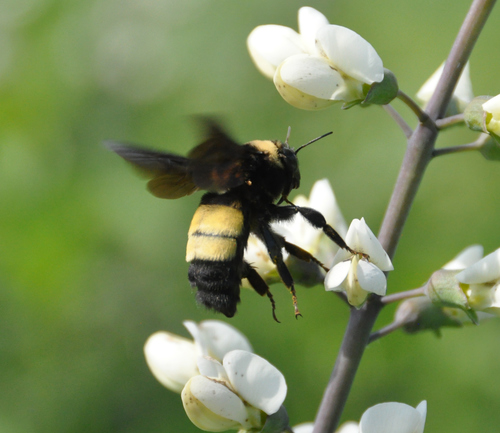
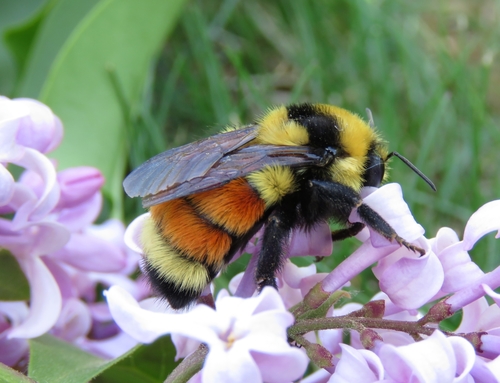
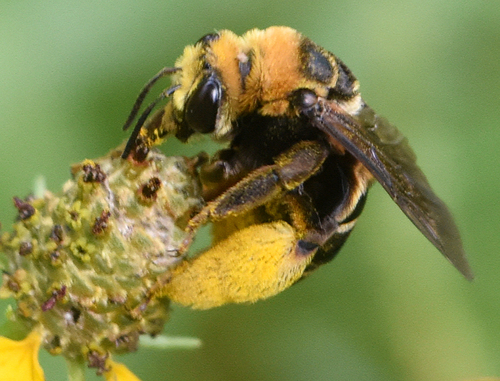
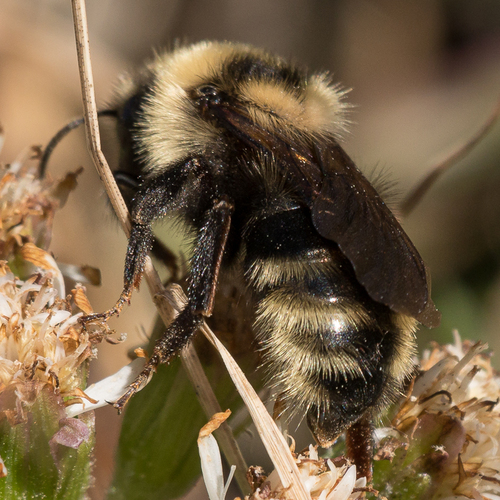
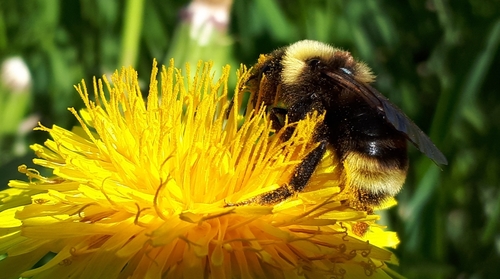
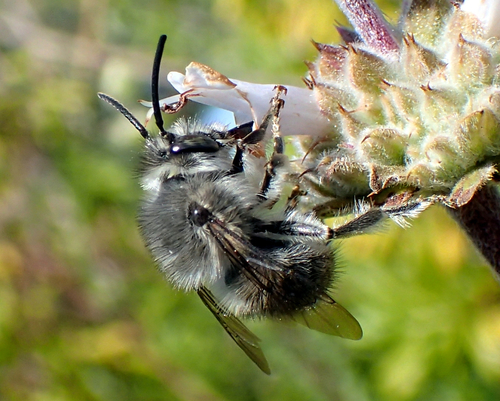
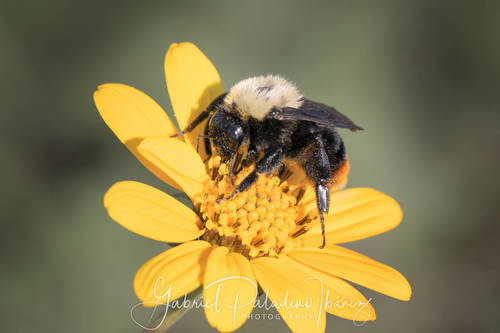
Bombus bellicosus Smith, 1879, commonly called the bellicose bumblebee, has a similar appearance to other bumblebees, with a body patterned in black, yellow, and orange. Its antennae, head, and eyes are all entirely black. The dorsal side of the thorax is covered in yellow hairs, with a central patch of hairless black exoskeleton visible. The first approximately four abdominal tergites are black, and the last approximately three are orange. Like other bumblebees, bellicose bumblebees have long hairs on the tibia of their hind legs that are used to collect pollen.
B. bellicosus is a South American species of bumblebee, found in Argentina, Uruguay, and across Brazil, where it occurs alongside the related species B. pauloensis. The species has been observed disappearing from its northeastern range limit, the state of Paraná. Like many other bumblebee species, bellicose bumblebees build their hives underground, beneath soil and leaf litter. They prefer to live in areas with shrubs and grasslands.
Artificial breeding and rearing of bellicose bumblebees has been attempted to better understand their reproduction. These attempts have not produced conclusive information about the specific details of B. bellicosus reproduction, and many queens died before laying eggs. It is assumed that B. bellicosus reproduces in a similar way to other bumblebees.
These bees are described as excellent pollinators, and make a significant contribution to pollination within their native habitats. Research conducted in Uruguay found that pollination by bellicose bumblebees and B. pauloensis increased seed yield in red clover plants, due to their high pollination efficiency. B. bellicosus also shows plant selectivity when foraging: on average, individuals visit only 1 to 2 plant species per foraging trip, and when two species are visited, one is used more than the other. This pattern is thought to follow optimal foraging theory, where focusing on one plant maximizes the efficiency of pollination and pollen collection per trip. This strategy also increases cross-pollination, making the bees more effective pollinators for the plant species they visit.