About Bolma rugosa (Linnaeus, 1767)
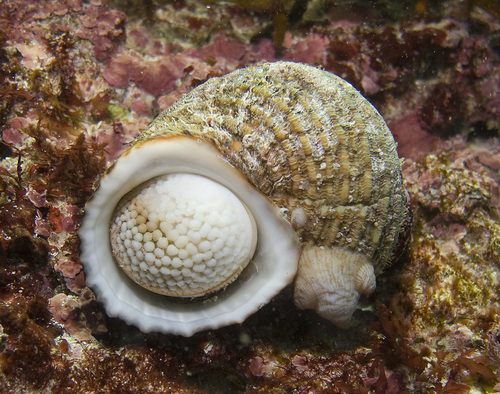
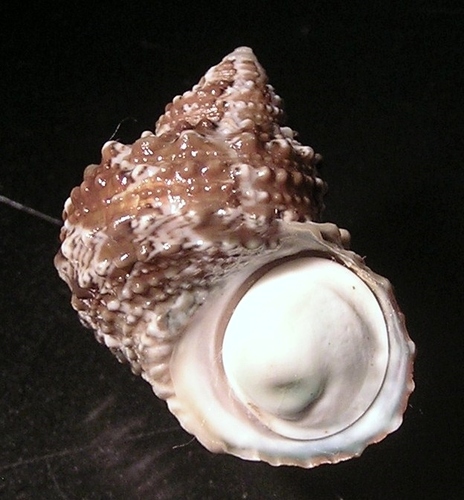
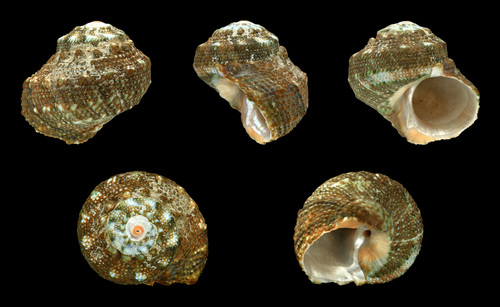
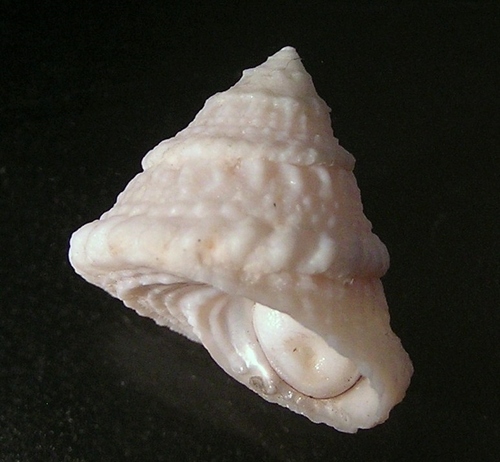
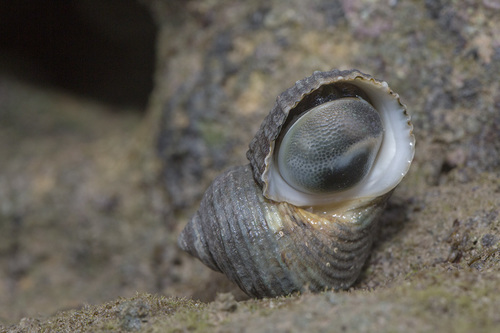
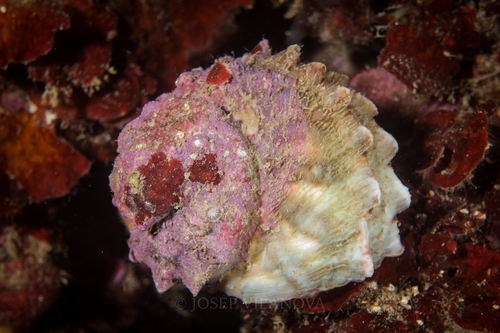
This species is Bolma rugosa (Linnaeus, 1767). For this species, the shell size ranges between 25 mm and 70 mm. The shell is solid, imperforate, and conical in shape, and its color is brown or ash-gray. The suture is canaliculate, and is bordered below by a series of curved radiating tubercles. The shell has 6 to 7 whorls, which are obliquely striate with lamellae. The upper whorls are carinate, and are tuberculate or spinose at the periphery. The body whorl descends, and is either rounded or bicarinate, with spiral lirae. The base of the shell has prominent radiating striae. The aperture is obliquely, transversely oval, and pearly on the interior. The columella is arched, white, and pearly, with an orange callus that widens over the umbilical region and extends across the parietal wall. The operculum is short-oval. It is brown on the interior, and contains four whorls, with its nucleus positioned one-third of the way across the operculum face. On the exterior, the operculum is bright orange, polished, and marked with a spiral callous ridge. This species is distributed in the Atlantic Ocean off the coasts of Portugal, Western Sahara, the Canary Islands, Cape Verdes, Madeira, and the Azores. It is also found in the Mediterranean Sea, off the coasts of Greece, Sicily, and northern Catalonia.