About Bolitoglossa mexicana Duméril, Bibron & Duméril, 1854
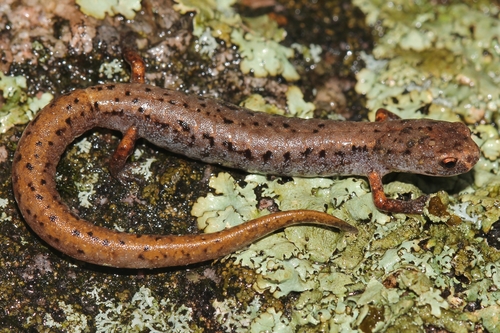
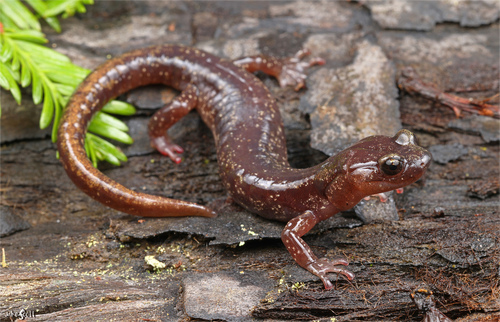
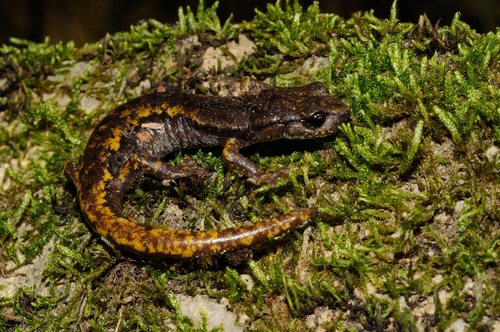
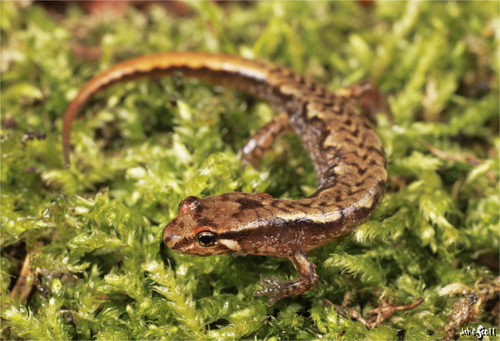
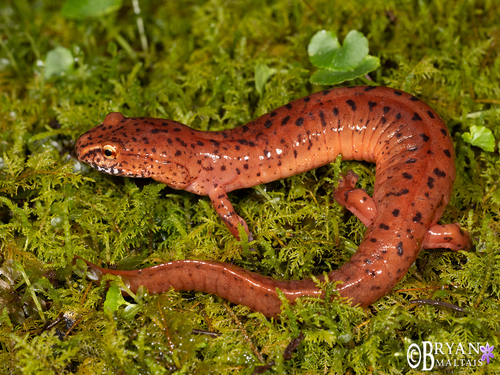
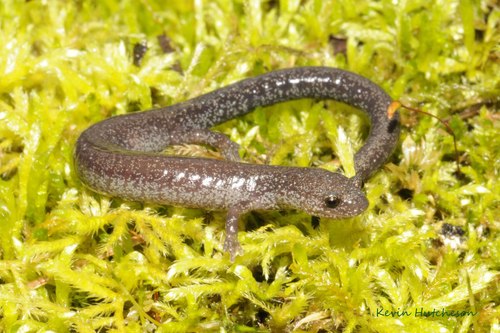
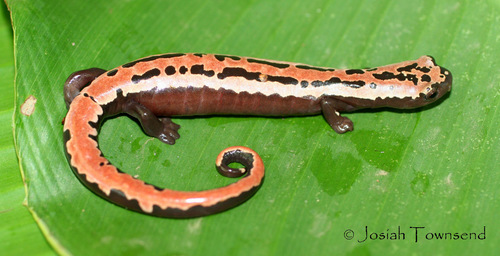
The Mexican climbing salamander (Bolitoglossa mexicana) is a species of salamander that belongs to the family Plethodontidae. This species is confirmed to be present in Belize, Guatemala, Honduras, and Mexico, and its presence in Nicaragua is unconfirmed. Its natural habitats include subtropical or tropical dry forests, subtropical or tropical moist lowland forests, subtropical or tropical moist montane forests, plantations, and rural gardens. It is currently threatened by habitat loss. Like all other members of Plethodontidae, the Mexican climbing salamander is lungless and breathes entirely through its skin. This lungless form of respiration requires moist habitats to support gas exchange and limit water loss. It reproduces via direct development: embryos hatch as miniature adults, instead of going through a free-living larval stage. Its habitat selection and behavior are strongly shaped by the balance between oxygen absorption and water loss; smaller individuals gain the benefit of greater oxygen uptake, but this comes at the cost of increased water loss.