About Bolinus brandaris (Linnaeus, 1758)
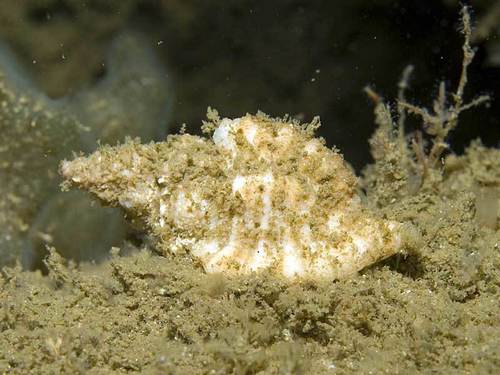
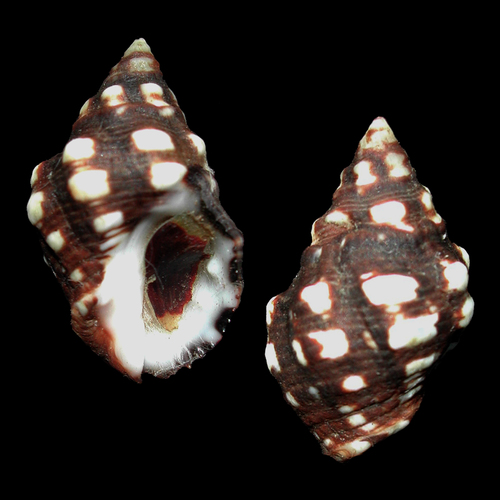
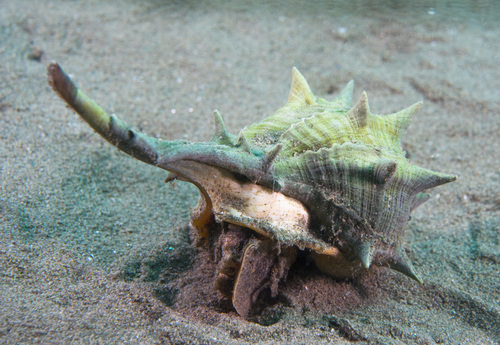
Bolinus brandaris, originally named Murex brandaris by Linnaeus and also referred to as Haustellum brandaris, is commonly called the purple dye murex or the spiny dye-murex. It is a species of medium-sized predatory sea snail, an edible marine gastropod mollusk that belongs to the family Muricidae, the murex snails or rock snails. This species appears in the fossil record dating to the Pliocene, with an age range from 3.6 to 2.588 million years ago. Fossil shells of this species have been discovered in Cyprus, Spain, and Italy. Ancient Phoenicians used this species to extract the imperial dye known as Tyrian purple. This snail inhabits the central and western areas of the Mediterranean Sea, and has also been found on isolated coral atoll beaches in the Indian Ocean and South China Sea. It lives on rocks in shallow water. It has been known since ancient times both as a source of purple dye and as a popular food source, and one of its regional names is sconciglio, which is the origin of the word scungilli. Like many other species in the family Muricidae, B. brandaris can produce a secretion that is milky and colorless when fresh, but turns into a strong, long-lasting dye when exposed to air. This was the mollusk species ancient people used to produce the fabric dye Tyrian purple. Sea snails of another species, the banded dye-murex Hexaplex trunculus, were also used to produce a purple-blue or indigo dye. In both species, the dye is secreted in the mucus of the mollusks' hypobranchial glands. In Spain, particularly along the Mediterranean coast and in the Gulf of Cádiz, this snail is called cañaílla, and it is valued as food. B. brandaris is a cannibalistic species. Evidence indicates that intensive breeding by ancient Minoans led to pierced shells, which may have been caused by other snails due to high population density in breeding tanks.