About Boana platanera Escalona, Marca, Castellanos, Fouquet, Crawford, Rojas-Runjaic, Giaretta, Señaris & Castroviejo-Fisher, 2021
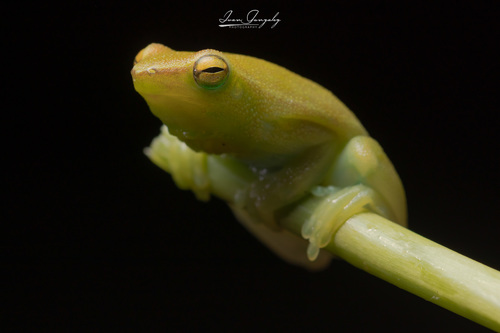
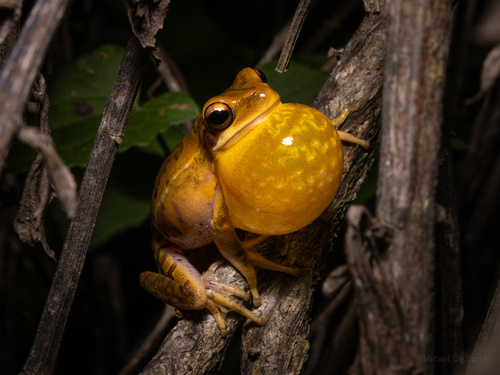
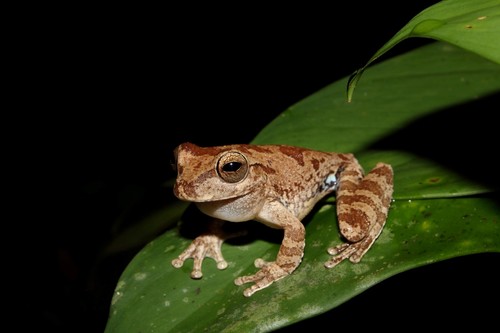
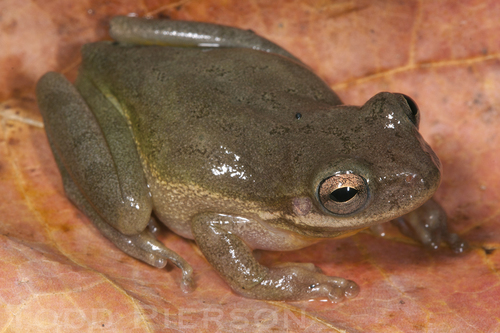
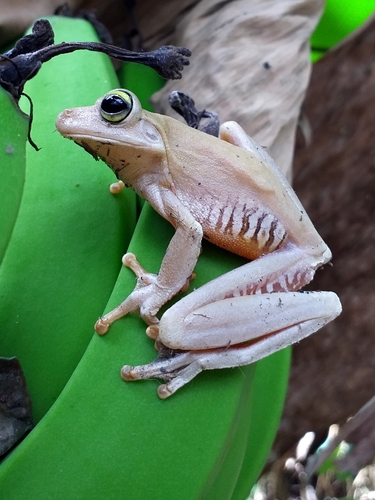
Boana platanera is typically inactive during the daytime, when it displays a pale cream body coloration. At night, its coloration becomes much more variable, ranging from yellow to tan and light brown, and features more or less well-defined brown markings. These markings can be irregular or shaped like an X. This species exhibits sexual dimorphism: females are larger than males, with an average snout–vent length of 63.1 millimetres (2.5 in), compared to an average of 54.3 millimetres (2.1 in) in males. The advertisement call of Boana platanera is complex, made up of around five notes, and has a total duration between 200 and 451 milliseconds. Boana platanera is distributed across parts of Venezuela, Colombia, Panama, and Trinidad and Tobago. In Venezuela, it is widely distributed but restricted to areas north of the Orinoco River; the river acts as a geographical barrier separating this species from Boana xerophylla. Boana pugnax is a sympatric species that is sometimes confused with Boana platanera. In addition to its broad geographical range, Boana platanera occurs across a wide elevation range, recorded from sea level up to 2,450 metres (8,038 ft) in altitude. It can also inhabit a wide variety of habitats, including anthropogenic environments.