About Boa imperator Daudin, 1803
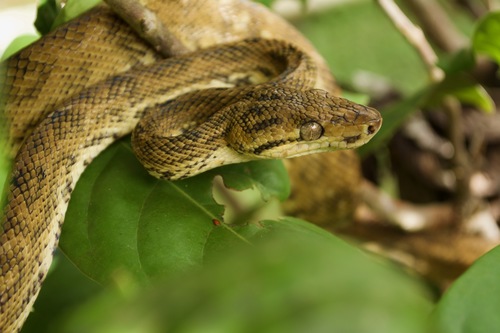
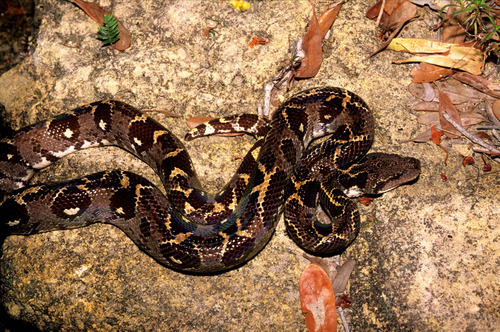
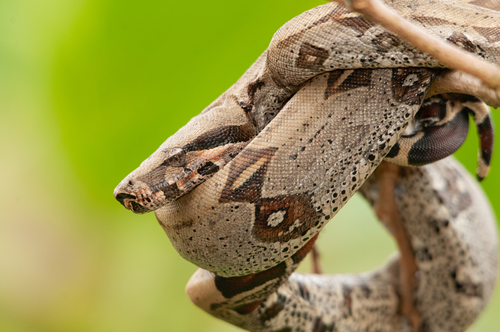
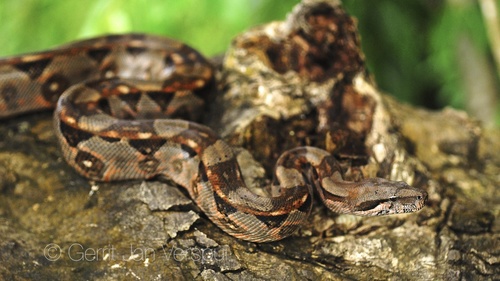
Boa imperator, described by Daudin in 1803, is a widely distributed snake species found across Mexico, Central America, northwestern Colombia, and multiple coastal islands in the region. Its official type locality is listed as Central America, principally Mexico. This species prefers rainforest habitats, drawn there by suitable humidity and temperature, cover to hide from predators, and plentiful prey. Because of its large geographic range across varied localities, Boa imperator’s appearance varies considerably by location. As one of the smaller species in the Boa genus, fully grown adults average between 1.3 m (4.2 ft.) and 2.5 m (8.2 ft.) in length, though individuals have been recorded reaching 3.7 m (12 ft.). Adult individuals typically weigh around 6 kg (13 lb), and females are consistently significantly larger than males. Boa imperator has a documented lifespan of 20 to 30 years in the wild, and captive individuals can live longer than 40 years. While Boa imperator has almost identical patterning to Boa constrictor, it can often be distinguished by its darker tail, which is typically dark brown or very dark red. Like Boa constrictor, Boa imperator is just as brightly colored overall, and can be selectively bred into a wide range of color morphs under appropriate captive breeding conditions. Notably, Boa imperator is one of only two snake species confirmed to have an XY sex chromosome system. Distinct local populations have unique characteristic traits: A population on the Cayos Cochinos (Hog Islands) off northern Honduras has naturally evolved hypomelanistic skin with reduced melanin, producing lighter-colored snakes. These individuals still retain the species’ characteristic darkened tail tip, though their tail color ranges from salmon-pink to orange instead of the typical darker shades. The well-studied Nicaraguan population of Boa imperator typically has a compact saddle pattern along its back, which often forms circular and spherical shapes. Colombian Boa imperator populations vary widely in size, including both some of the largest and some of the smallest individuals of the species. The species also hosts multiple dwarf insular populations on several Caribbean islands. Along the Pacific coast of Colombia, small to medium-sized Boa imperator live on Gorgona Island, a former prison colony that has been reclaimed by nature and supports high biodiversity. Boa imperator is commonly mistaken for other Boa species, especially Boa constrictor. Both species share very similar patterning, including a shift to a deeper darker red tail color. As a result, the informal common name "red-tailed boa" is used for both species, most often in the pet trade.