About Blitum nuttallianum Roem. & Schult.
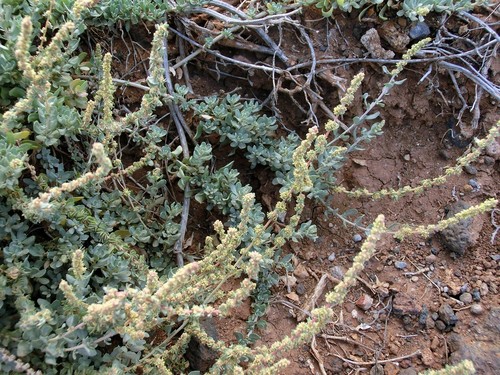
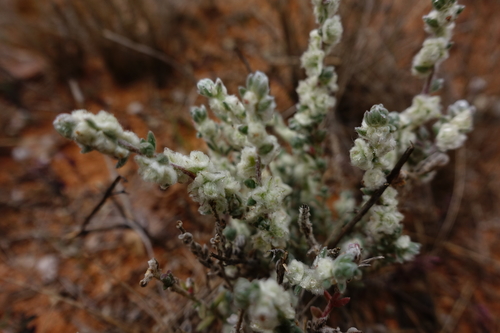
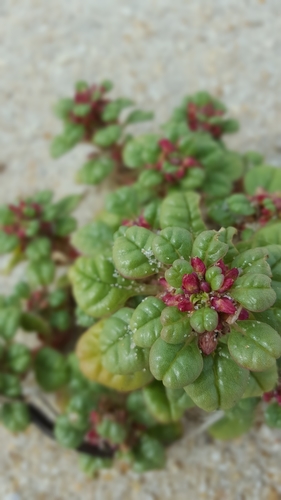
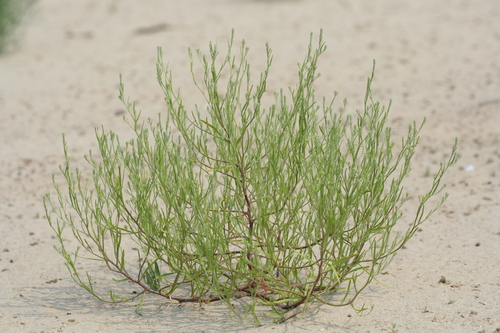
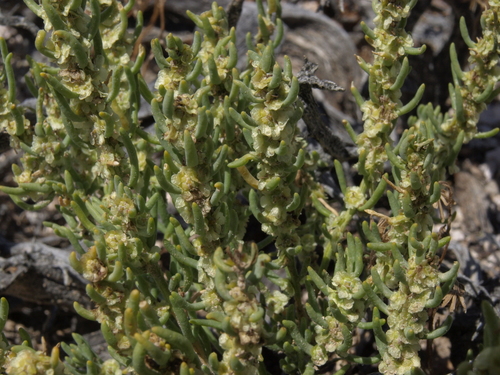
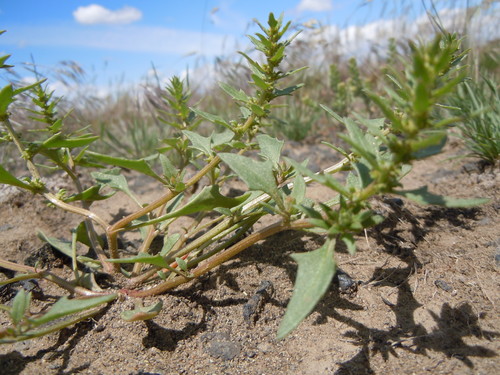
Blitum nuttallianum Roem. & Schult., synonymized as Monolepis nuttalliana, is a species of flowering plant in the amaranth family. It is commonly known by the names povertyweed and Nuttall's povertyweed. This plant is native to North America, where it is widespread and common across a range extending from Alaska and New England to Mexico. It grows in many types of habitat, including disturbed areas, and often prefers wet locations. It is a fleshy annual herb that produces two or more erect, reddish, hairless stems that reach up to roughly 40 centimeters in height. Its thick leaves are lance-shaped or arrowhead-shaped, and grow up to 4 centimeters long. Clusters of several rounded flowers grow from the leaf axils, and these flowers produce small fruits around 2 millimeters wide. Many Native American groups used this plant as both medicine and food. Southwestern tribes ground the seeds of Blitum nuttallianum and mixed them with mesquite beans and corn. The roots of this plant are edible, and the young stems are edible after cooking.