About Blennosperma bakeri Heiser
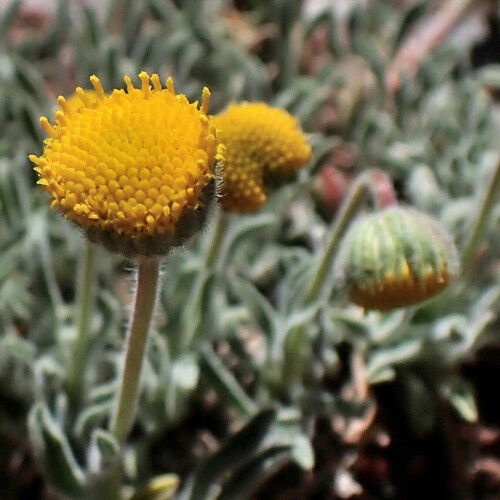
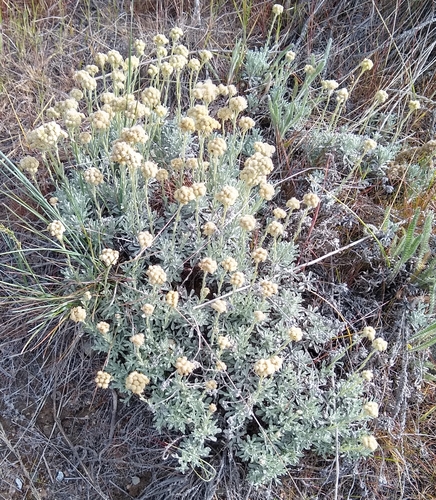
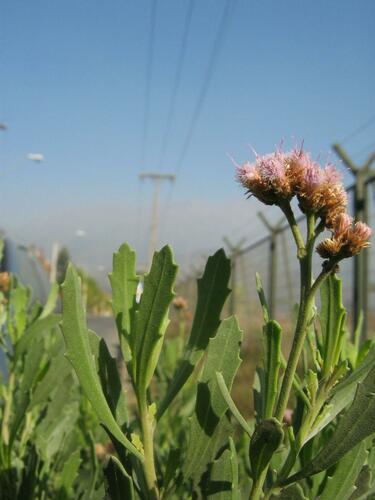
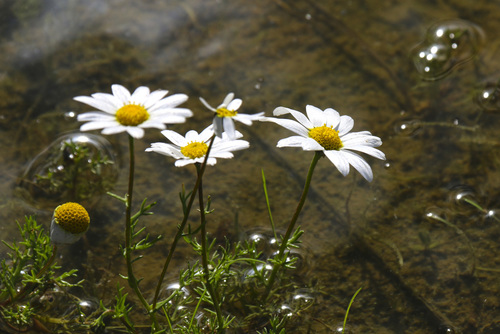
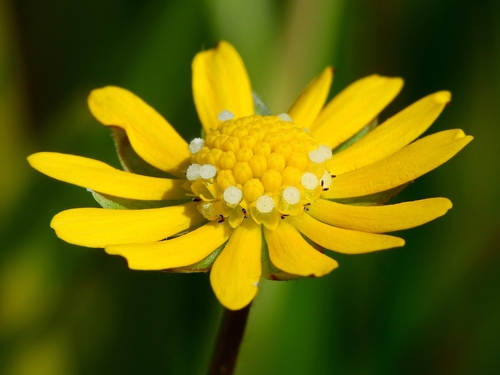
Blennosperma bakeri Heiser is a small annual herb that grows less than 30 centimeters tall. Its leaves are 5 to 15 centimeters long, linear in shape, and have lobes near their ends. The plant's inflorescence holds a small number of flower heads. Each flower head has a center of yellow disc florets; some of these disc florets have prominent white stigmas and white pollen. A fringe of yellow ray florets with red stigmas lines the outer edge of each flower head. The fruit is an achene a few millimeters long that becomes sticky when exposed to water. This plant is currently known from fifteen total occurrences, but six of these populations may be degraded or destroyed entirely. Several artificial vernal pools have been constructed to boost the plant's population, but the United States Fish and Wildlife Service does not view these artificial pools as an adequate replacement for natural vernal pool habitat.
Blennosperma bakeri is endemic to Sonoma County, California, where it occurs at a small number of remaining vernal pool sites in the wet grasslands of Laguna de Santa Rosa and Sonoma Valley. It is a federally listed endangered species. It grows alongside other rare vernal pool plants, including Sebastopol meadowfoam (Limnanthes vinculans) and Burke's goldfields (Lasthenia burkei). Threats to the species' survival include habitat alteration from development, road maintenance, grazing, and agriculture, as well as collection of the plant, herbivory by thrips, and invasive plant species.