About Blatta orientalis Linnaeus, 1758
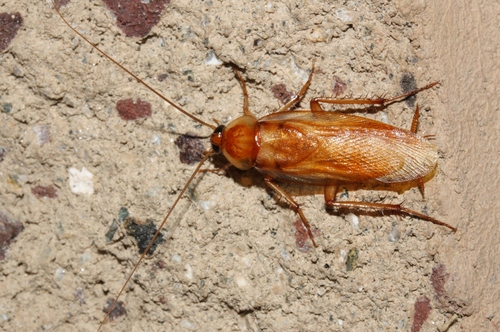
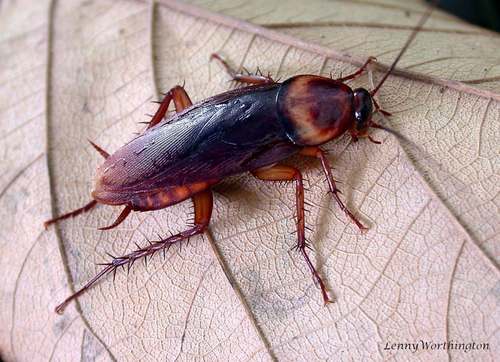
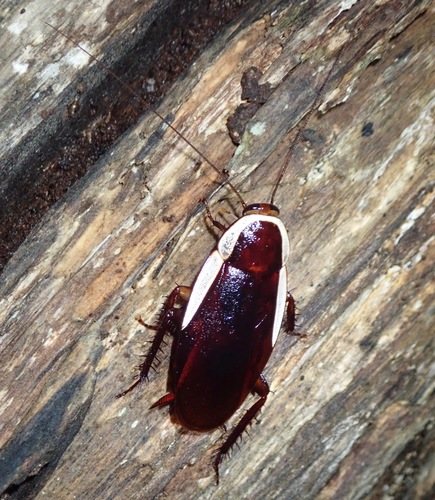
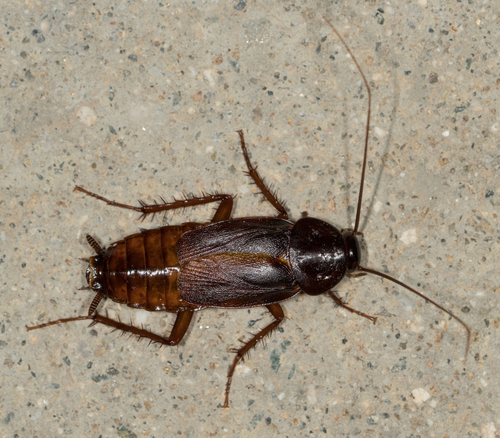
The oriental cockroach, scientifically named Blatta orientalis Linnaeus, 1758, is also commonly called waterbug or black cockroach. It is a large cockroach species: adult males measure 18–29 mm (23⁄32–1+5⁄32 inches) long, while adult females measure 20–27 mm (25⁄32–1+1⁄16 inches) long. Their bodies are dark brown or black, glossy, and differ in appearance between males and females. Females look wingless to casual observation, but they are actually brachypterous with non-functional wings positioned just below their heads, and they have wider bodies than males. Males have long brown wings that cover three quarters of the abdomen, and narrower bodies. Both sexes are entirely flightless. Females of this species resemble the Florida woods cockroach, and are often misidentified as that species. The species was originally endemic to the Crimean Peninsula and the surrounding regions of the Black Sea and Caspian Sea, but now has a cosmopolitan global distribution. Oriental cockroaches typically move more slowly than other cockroach species. They are called waterbugs because they prefer dark, moist habitats. They are most often found around decaying organic matter, in bushes, under leaf cover, under mulch, and in damp locations within and near human homes including sewer pipes, drains, basements, and porches, where they can act as major pests.