About Blarina carolinensis (Bachman, 1837)
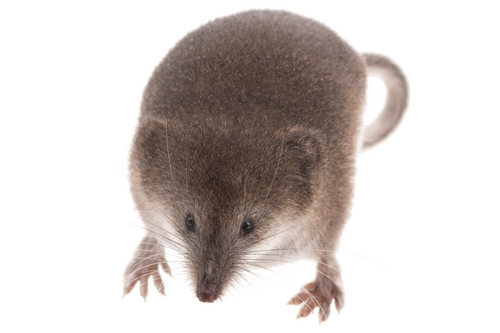
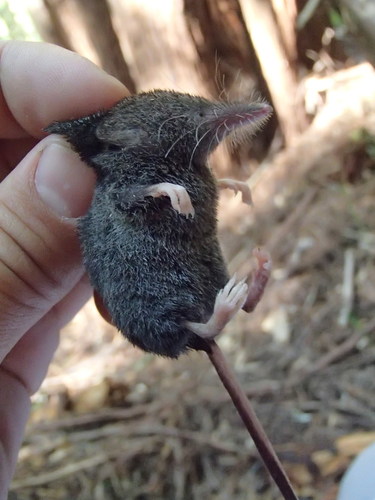
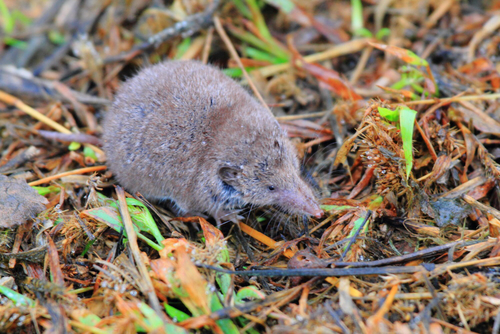
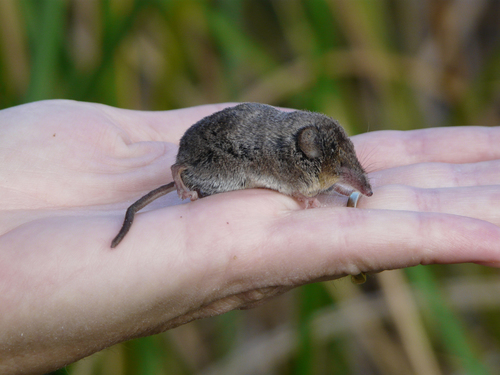
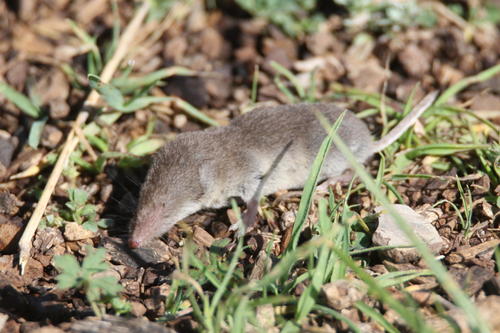
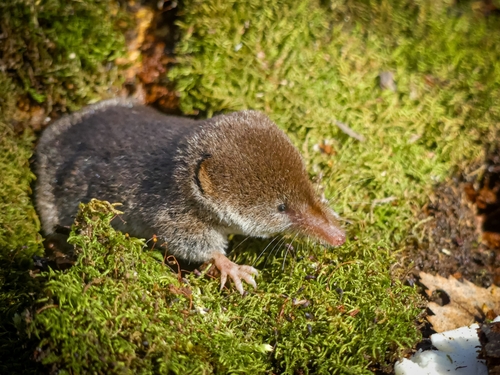
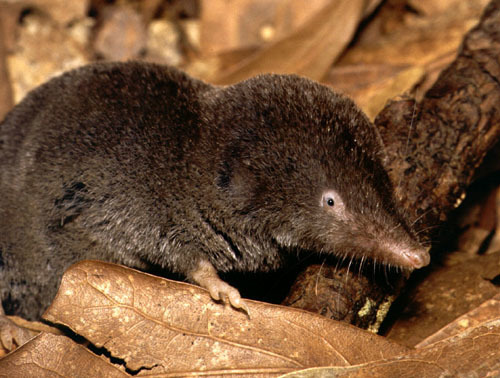
The southern short-tailed shrew, scientific name Blarina carolinensis (Bachman, 1837), is the smallest shrew in its genus. It has a total body length of 7 to 10 cm (3 to 4 in), and weighs less than 14 g (0.5 oz). It has a comparatively heavy body, short limbs, a thick neck, a long pointed snout, and ears that are almost hidden by its soft, dense fur. As its common name suggests, its hairy tail is relatively short, measuring 1.2 to 2.5 cm (0.5 to 1.0 in). Its feet are adapted for digging, with five toes that each end in a sharp, curved claw. Its fur is slate gray, and is paler on the underparts. This shrew is distributed across the southeastern United States, ranging from southern Virginia to eastern Texas, north to central Oklahoma, and up the Mississippi valley as far as southern Illinois. Within this range, it primarily lives in pine forests, but can occupy habitats from dry to wet, including swampy areas, disturbed forests, and abandoned agricultural land. Two subspecies of Blarina carolinensis are currently recognized. B. c. carolinensis ranges from southern Virginia to northern Florida, west to eastern Mississippi, southern Illinois, northeastern Texas, and central Oklahoma. B. c. minima is found in eastern Texas, Louisiana, and the Mississippi valley as far as eastern Arkansas and far western Kentucky. Fossils of this species date to the Pleistocene; during that period, the species may have spread as far north as South Dakota. The breeding season of the southern short-tailed shrew runs from March to November. Females produce two or three litters each year, with each litter containing two to six young. Young shrews are reared in nests made of grasses and leaves. These nests are placed at the end of tunnels around 30 cm (12 in) below ground, or inside rotten logs.