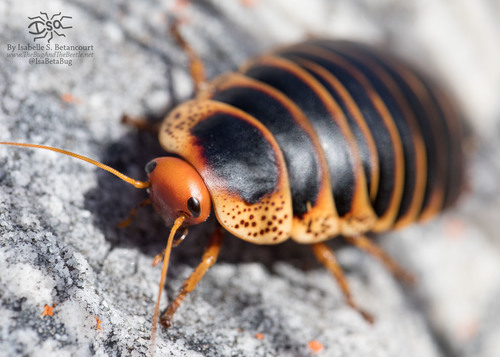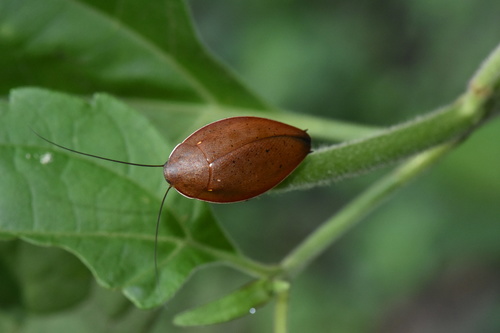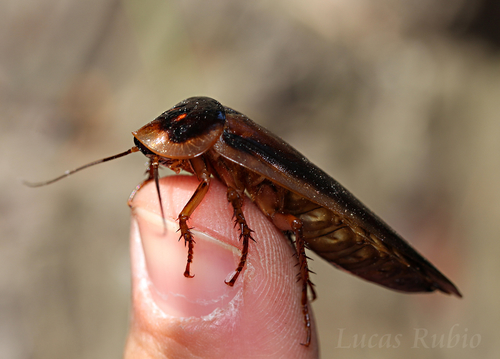
About Blaptica dubia (Serville, 1838)
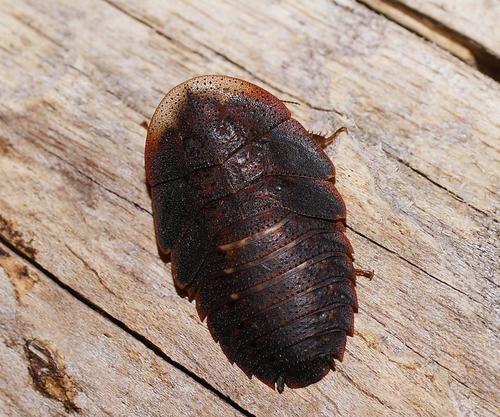
Blaptica dubia, also known as the dubia cockroach, is a sexually dimorphic species. Adult males have full wings that cover their entire body, while females only have small wing stubs — their forewings, called tegmina, are only around one quarter of their body length. Adult individuals range in color from dark brown to black, and sometimes have slightly lighter orange spots or stripes that are only visible in bright light. Coloring can vary slightly between different colonies based on their environment and diet. Blaptica dubia is partially ovoviviparous, meaning eggs hatch inside the female's body before she gives birth to live young. Under favorable conditions, females can produce 20 to 40 nymphs per month. Further research confirms it is an ovoviviparous species that typically gives birth to live young. One study recorded a pregnancy length of 48 to 64 days for individuals kept at 26°C (78.8°F) with 12-hour alternating light and dark periods. The female carries an egg capsule called an ootheca, which holds 20 to 35 eggs, until the eggs are ready to hatch; if stressed, she may drop the ootheca earlier. Adult Blaptica dubia can live up to 2 years, and females generally have a slightly longer lifespan than males. Growth and reproduction rates depend on environmental conditions, with optimal conditions falling between 25°C and 30°C, at a relative humidity above 60%. This species is native to the southern regions of South America, and documented specimens have been collected from Brazil, Argentina, and Uruguay. Their ideal active temperature falls at the upper end of the range 24°C to 35°C (75°F to 95°F), and they will not breed when temperatures are below 20°C (68°F). If humidity is too low, they cannot molt successfully. Compared to many other roach species, Blaptica dubia can tolerate lower humidity levels. When fed plenty of fruit, this roach stores extra water in its body, which it releases during times of stress. For captive individuals, providing high-moisture foods is more important than maintaining high enclosure humidity, so misting the enclosure is not required unlike for some other tropical pet insect species. Captive enclosures should be kept clean and dry to keep fecal droppings dry and prevent bacterial or fungal growth. Vertically stacked egg crates and good airflow both support these clean, dry conditions. Blaptica dubia has become a popular feeder insect, especially among people who keep and own tarantulas, amphibians, and reptiles. Keeping and breeding this species is simpler because they cannot jump or climb smooth surfaces, move relatively slowly, and rarely fly. They are also quiet, unlike crickets. Their need for tropical environmental conditions means escaped individuals are very unlikely to establish wild populations in colder, drier climates. While Blaptica dubia produces much less odor than many other cockroach species, it can cause allergic reactions in humans. One study found that Blaptica dubia and other feeder cockroaches (including Turkestan red runner cockroaches and Madagascar hissing cockroaches) have a high-protein, low-fat nutritional profile similar to crickets, and a better profile than mealworm or superworm larvae. Depending on what the cockroach has eaten, the contents of its gut can provide essential nutrients that are not available from cockroaches with empty guts. In studied cockroaches, most vitamins and minerals are well represented, but the species has the low calcium to phosphorus ratio typical of all cockroaches, and captive Blaptica dubia also has relatively low levels of vitamin A and vitamin E. Supplementing these nutrients for feeder Blaptica dubia is often advisable.