About Blaberus discoidalis Serville, 1838
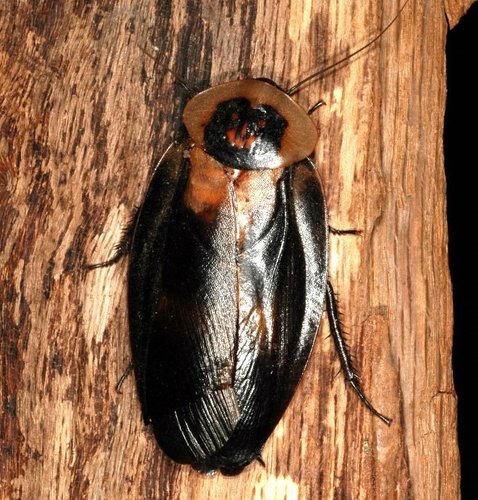
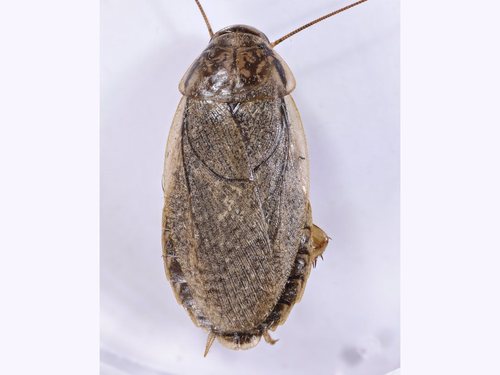
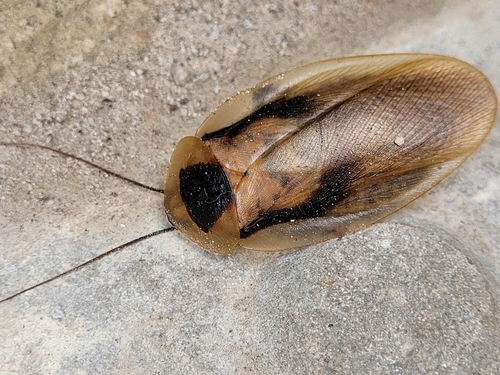
Blaberus discoidalis, described by Serville in 1838, is a species of cockroach with common names including the discoid cockroach, tropical cockroach, West Indian leaf cockroach, false death's head cockroach, Haitian cockroach, and drummer. It is a member of the 'giant cockroach' family Blaberidae, and is native to Central America.
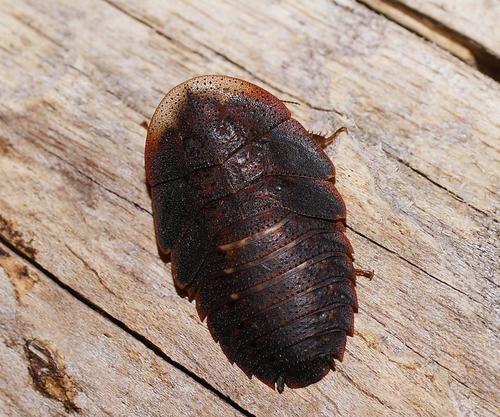
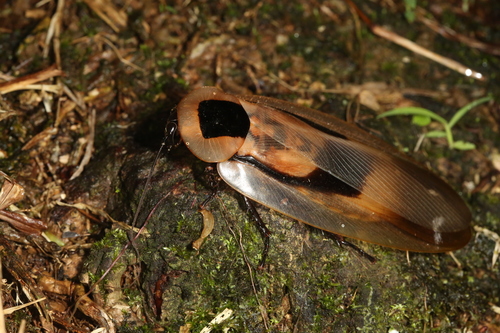
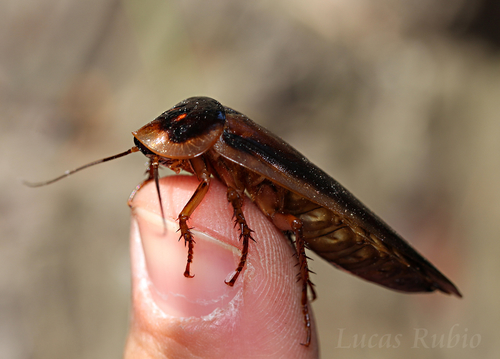
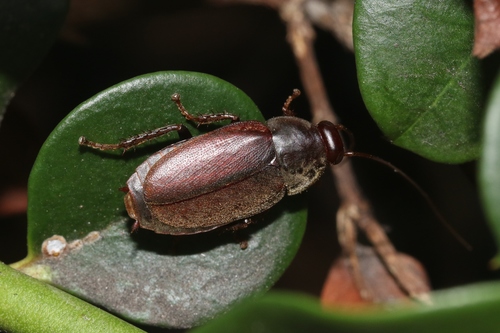
Adult Blaberus discoidalis measure around 35–45 mm (1.4–1.8 in) in length. They are tan in color, with a dark brown to black patch on the pronotum. Juvenile individuals are brown with tan speckles, and take 4–5 months to reach adulthood. Adults have wings but do not fly actively, and cannot climb smooth vertical surfaces. These traits make them easy to care for when kept in captivity. The species is called the false death's head cockroach because it bears a superficial resemblance to the death's head cockroach, Blaberus craniifer.
Blaberus discoidalis is naturally distributed across Jamaica, Cuba, Hispaniola, Puerto Rico (including Vieques Island), Panama, Colombia, Venezuela, Trinidad and Tobago, and Florida.
Because Blaberus discoidalis is very easy to raise in captivity, it is commonly used as food for insectivorous pets such as tarantulas, bearded dragons, and other lizards. The species breeds readily in captivity. When kept warm, individuals reach breeding age in approximately 6 months; a temperature of 85–90 °F is recommended for more productive breeding. Females carry their eggs inside a brooding pouch that has a genital chamber and vestibulum, until the eggs are fertilized by a male's spermatophore.