About Biston robustum Butler, 1879
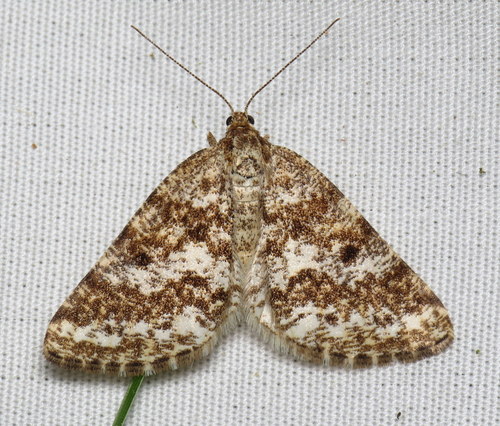
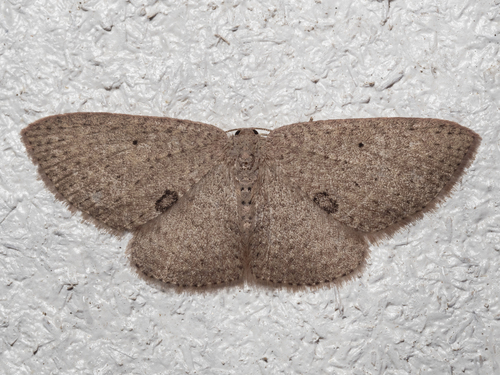
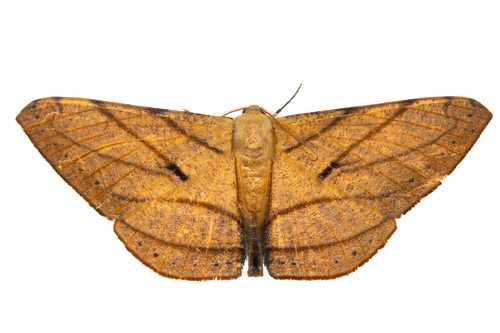
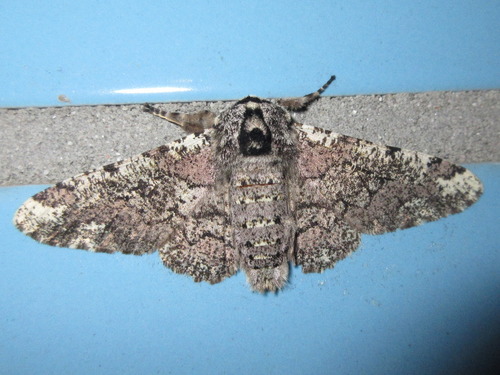
Biston robustum Butler, 1879 is a species of moth in the family Geometridae. It is a large moth, with the English common name giant geometer moth in its native range. Its regional common names are トビモンオオエダシャク in Japanese, 몸큰가지나 in Korean, and 褐纹大尺蛾 in Chinese. It is related to and generally similar in appearance to the widespread peppered moth. This species is distributed across China (Shandong, Shaanxi, Shanghai, Jiangsu, Jiangxi), Taiwan, Japan, Russia, North Korea, South Korea, and Vietnam. Biston robustum has received recent attention for its use of chemical mimicry to avoid predation by ants. Like the larvae of many other geometrid moths, Biston robustum larvae use visual mimicry, strongly resembling a twig of their host plant. Recent studies have confirmed that Biston robustum larvae also use chemical mimicry: they store chemicals obtained from their food in their cuticle, leaving ants largely unable to distinguish the larva from a twig even after contact with the ants' highly sensitive antennae. Foraging ants searching for prey have been observed walking directly along Biston robustum larvae without detecting their presence. Using chemicals directly obtained from the larva's diet is an advantage, as it means the larva will always be a chemical match for the specific plant it is actively feeding on. Biston robustum is a highly polyphagous species. Biston robustum larvae are polyphagous, feeding on a wide variety of different plant genera, including Abelia, Acer, Akebia, Bothrocaryum, Camellia, Castanea, Celastrus, Chaenomeles, Corylus, Euonymus, Eurya, Forsythia, Ilex, Malus, Prunus, Pyrus, Quercus, Robinia, Rosa, Styrax, Viburnum, and Zelkova. Researchers predict that further study will reveal other moth species also use this form of defensive mimicry.