About Bistolida stolida (Linnaeus, 1758)
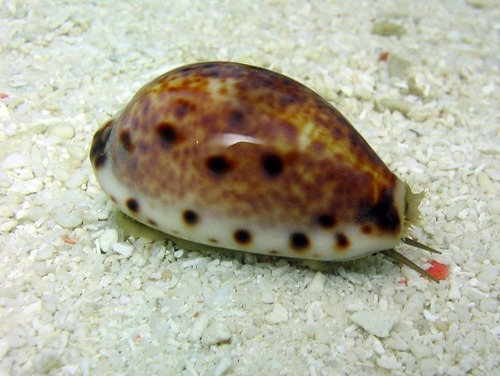
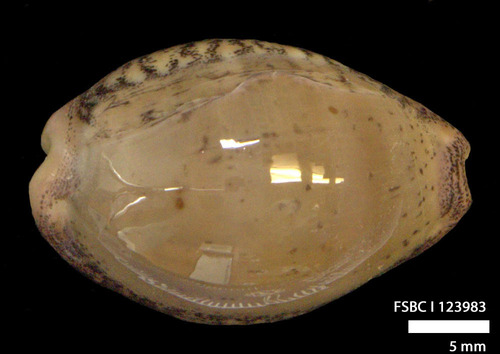
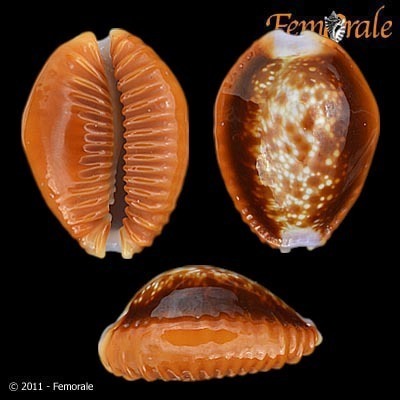
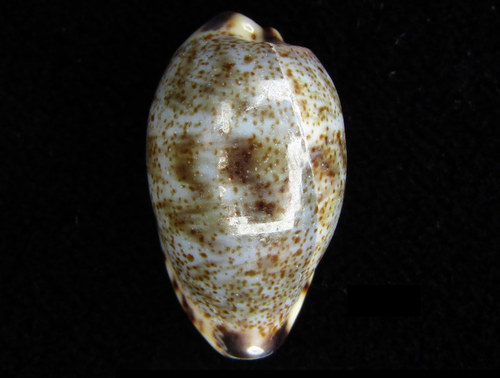
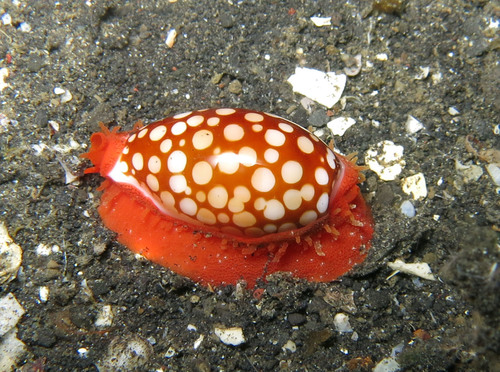
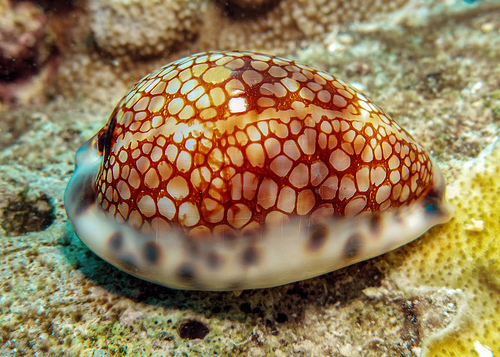
Description: This is an uncommon species of cowrie. On average, adult shells are 22–30 millimetres (0.87–1.18 inches) in length, with a minimum recorded shell length of 15 millimetres (0.59 inches) and a maximum recorded length of 45 millimetres (1.8 inches). The dorsal shell surface is very smooth and shiny, with a base color of blue-gray, white, or light tan, marked with large, irregular dark brown blotches. The shell margins each bear one orange-brown spot, for a total of two spots. The base of the shell can be white or pink, with a long, narrow aperture lined with fine, long teeth that may be white or brown. Both ends of the shell are more or less rostrate, each bearing an orange-brown blotch. Living individuals have a transparent mantle with long, white, tree-shaped sensory papillae, and the mantle can be fully retracted into the shell. Distribution: This species and its subspecies occur in the Indian Ocean, along coasts and seas surrounding Aldabra, Chagos, the Comores, Kenya, Madagascar, the Mascarene Basin, Mauritius, Mozambique, Réunion, the Seychelles, South Africa, and Tanzania. They are also found in the Western and Central Pacific Ocean, at Kwajalein Atoll, the Marshall Islands, Guam, the Samoa Islands, New Caledonia, Melanesia, Vietnam, Taiwan, Australia, the Sulu Sea, Samar Island, and the Philippines. Habitat: These cowries primarily inhabit the tropical intertidal and subtidal zones on coral reefs, occurring at depths up to 30 metres (98 feet). During the day, they typically hide under rocks and in crevices. They begin feeding at dusk, and their diet consists of sponges and algae.