About Biscogniauxia atropunctata (Schwein.) Pouzar
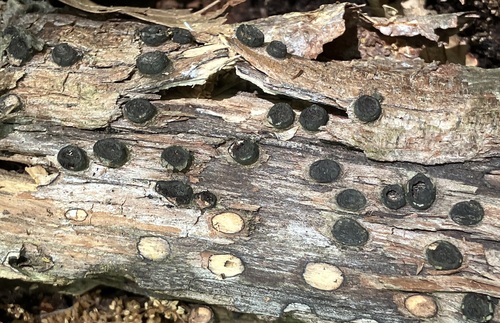
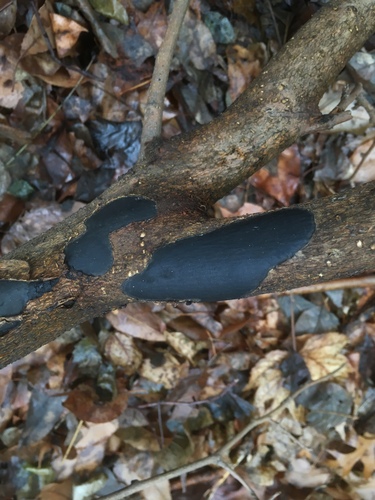
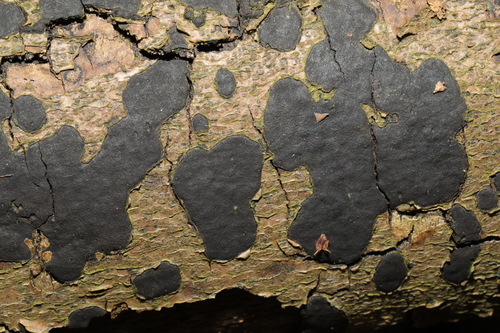
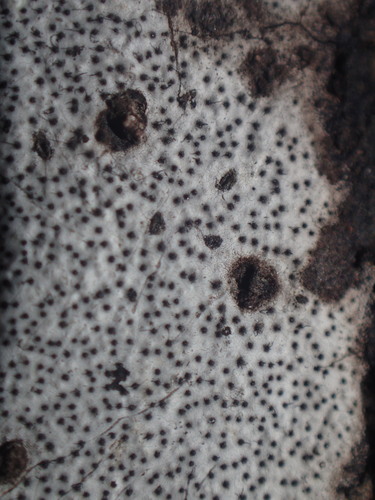
Patches of this fungus can grow to a few metres across. The fungus is white, sometimes bears black patches, and typically has a black margin. This species occurs east of the Rocky Mountains in North America, and can be found in spring and early summer. When it is not acting as a pathogen, Biscogniauxia atropunctata grows as a saprobe on oak and other hardwood trees, causing white rot in the host's deadwood. Its fruiting bodies grow in patches, with a whitish-gray surface covered in black dots that eventually become fully blackened across the entire structure. The fungus can colonize healthy trees, living undetected and harmlessly in the bark and sapwood for a period of time, with its spread controlled by the host tree's natural defenses. When host trees become stressed, however, the fungus invades the weakened host tissues, causing a dieback disease. The infection first kills the affected branches, then progresses down the trunk to form a canker that girdles the tree and kills the entire crown.