About Billardiera scandens Sm.
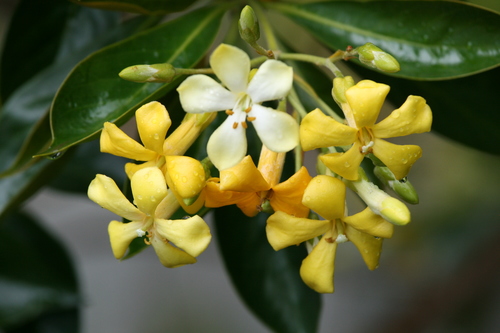
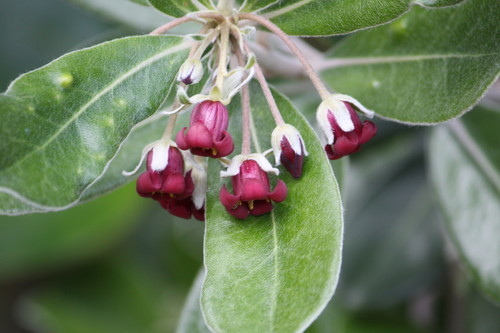
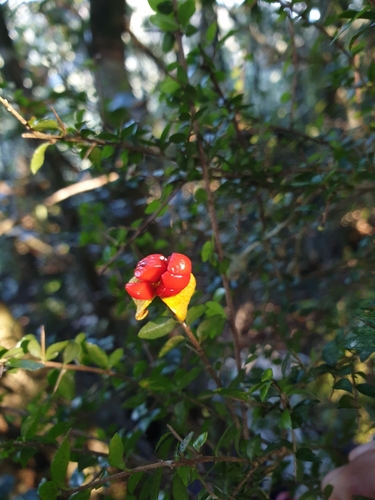
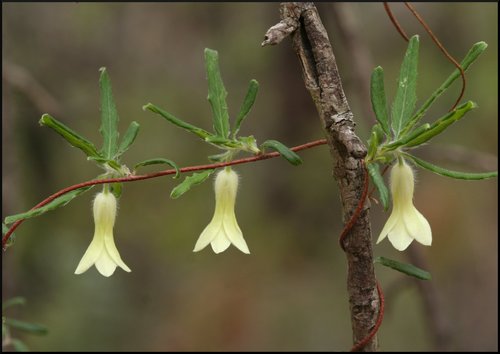
Billardiera scandens, commonly known as hairy apple berry or common apple-berry, is a small shrub or twining plant in the Pittosporaceae family. It grows in forests of coastal and tableland areas across all Australian states and territories, except the Northern Territory and Western Australia. Young growth has a silky texture and appearance, which becomes more brittle as dense mature growth develops. Its inflorescence holds single or paired yellow flowers, with pink-tinged yellow sepals, bright yellow petals, and is attached to a hairy, drooping peduncle. A summer growth flush produces oblong berries up to 30 mm long; these berries start out green, covered in fine hair, and look similar to tiny kiwifruit.
Both birds and people are attracted to the flowers and fruit of apple berry. The fruits only ripen after they have dropped to the ground, and are valued as Australian bush food. Their flavor is variously described as similar to stewed apples or kiwifruit. Aboriginal Australians eat apple berry as bush food, either when ripened, or by roasting unripened fruit. In 1898, botanist Joseph Maiden noted that children of European settlers in the common growing area around Port Jackson had eaten the berries since the settlement was founded in 1788. In 1889, he also noted that the plant was commonly called "Apple Berry", writing that "The berries are acid and pleasant when fully ripe. From their shape children call them 'dumplings.' When unripe, a small quantity of the juice produces very disagreeable and persistent heartburn."
Apple berry is a popular plant in Australian gardens, particularly for gardens that focus on indigenous plants. It grows as a rambling, non-dominant shrub, and works well planted beneath eucalyptus trees and between other native species. This species is also grown in gardens around the world, and is easy to propagate and maintain. It is an adaptable plant, tolerating a wide range of growing conditions including mild frost, semi-shade, and periods of dryness, though it grows best in moist conditions. It also tolerates a wide variety of soil types, including clay.