About Bielzia coerulans (M.Bielz, 1851)
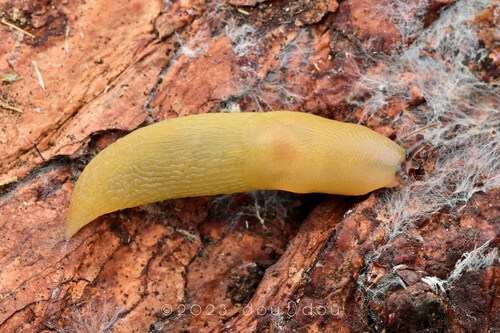
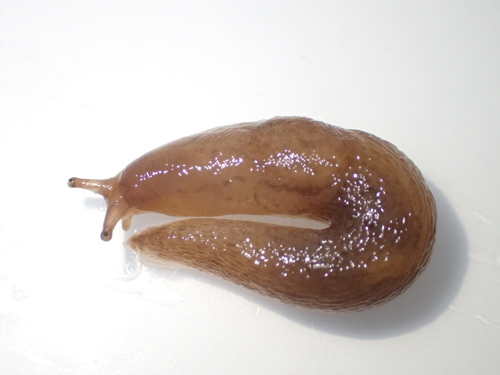
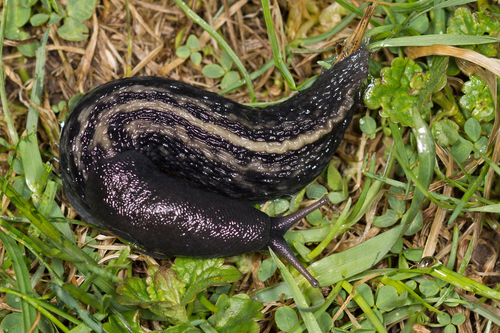
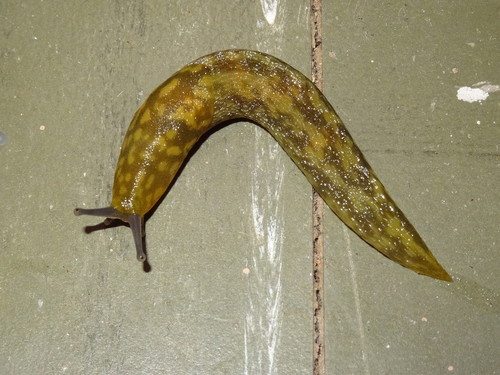
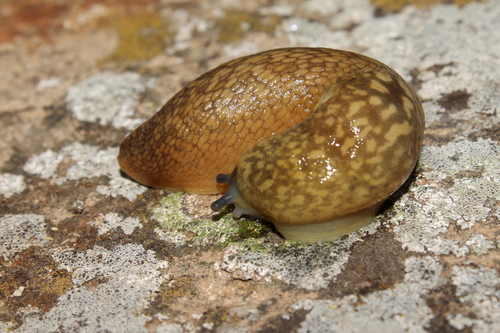
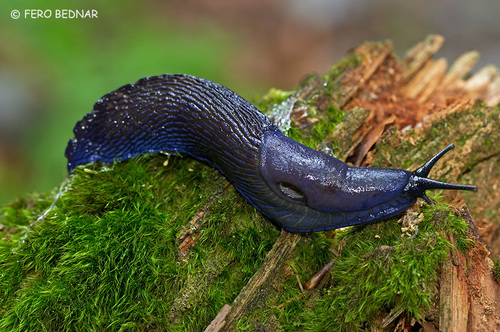
The scientific name of this species is Bielzia coerulans (M.Bielz, 1851). Adult slugs of this species turn blue, and reach a length of 100 to 140 mm. Their body color is evenly blue or bluish green, occasionally black. They have a dark greyish head and tentacles, pale yellowish body margins, and a pale yellowish or whitish sole. Juveniles are yellowish brown with dark lateral bands. In its reproductive system, the genitalia lack a penis, and only have an accessory organ for copulation. This species is endemic to the Carpathian Mountains of Central and Eastern Europe. Its type locality is the South Carpathians in Romania. Confirmed native populations occur in Moravia (Czech Republic, where it is listed as vulnerable VU), southern Poland, Slovakia, Ukraine, Romania, and Hungary. A presumed introduced population was discovered in 2012 in Westerwald, Rhineland-Palatinate, Germany. Bielzia coerulans lives in mountain deciduous and coniferous forests, usually on the forest floor or under dead wood logs. Individuals reach maturity between June and July. Copulation takes place on the soil. Each clutch contains 30 to 80 eggs. Adult slugs die after laying eggs. Half-grown juveniles hibernate over winter, and fully grown slugs emerge in May.