About Bibio femoratus Wiedemann, 1820
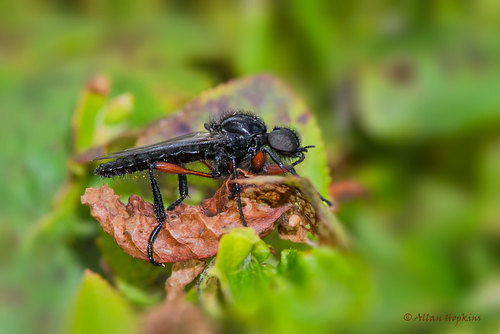
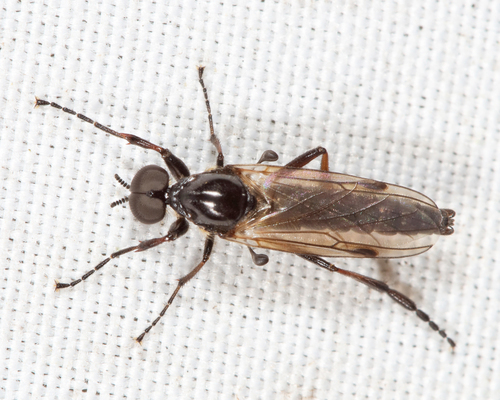
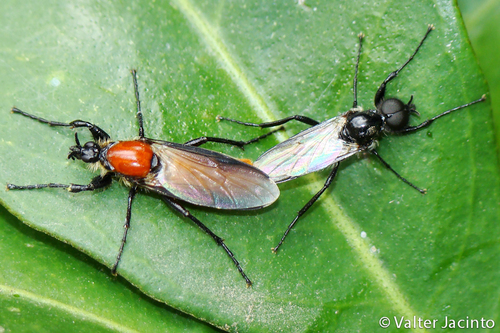
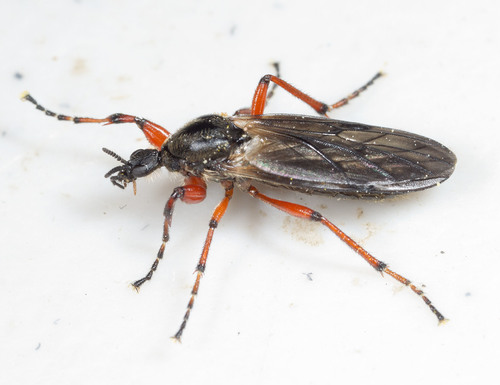
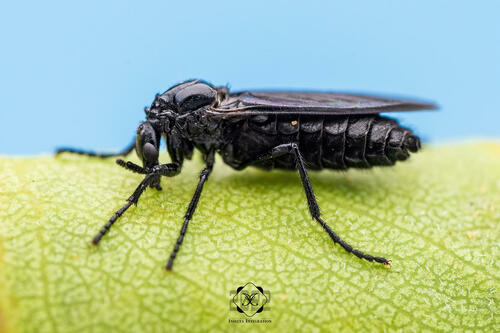
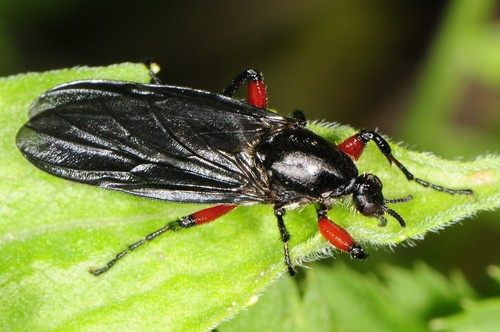
Bibio femoratus is a medium-sized species that is typically black overall, although its thorax and legs may be orange or red. Its antennae are relatively short and thick, consist of 10 segments, and are positioned low on the head. The wings usually have a dark spot on the leading edge, located around two-thirds of the way out from the body. Adult Bibio femoratus are usually abundant in early spring, and are known to form copulatory swarms, which is why they are sometimes called lovebugs. After fertilization, females lay their eggs randomly on soil surfaces. Larvae develop during fall and winter, feeding on decaying organic matter. Bibio femoratus is a slow, clumsy flier that is usually found within a couple of feet off the ground. Individuals have been observed tumbling and flailing their legs to right themselves after falling. Following synchronous emergence, Bibio femoratus forms large swarms made up of mating pairs. Mating pairs remain joined at the abdomen for an extended period. These insects seem oblivious to humans as a threat, and do not attempt to avoid sudden human movements or threatening gestures.