About Betula nana L.
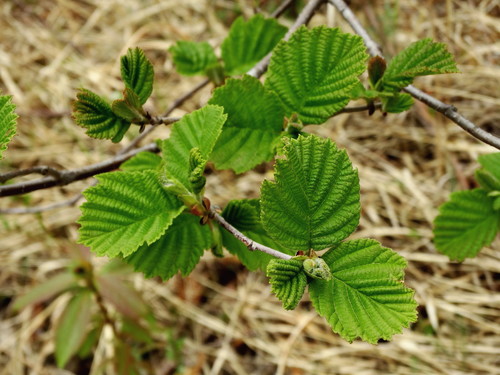
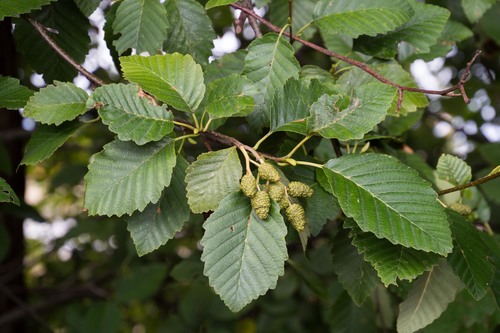
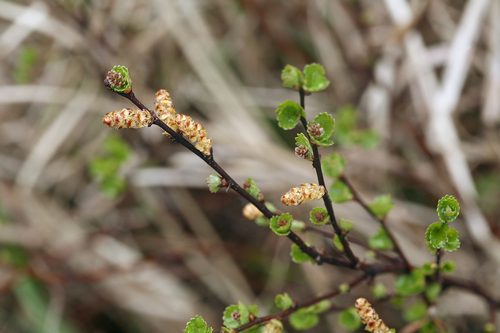
Betula nana L. is a monoecious, deciduous shrub that reaches a height of 1–1.2 metres (3 ft 3 in – 3 ft 11 in). Its non-peeling bark is shiny red-copper in colour. Its leaves are rounded, 6–20 millimetres (0.24–0.79 in) in diameter, with a bluntly toothed margin. The upper surface of the leaves is darker green. New leaves grow after snow melt, and the leaves turn red in autumn. Its fruiting catkins are wind-pollinated, erect, 5–15 millimetres (0.20–0.59 in) long and 4–10 millimetres (0.16–0.39 in) broad. Betula nana is native to arctic and cool temperate regions of Greenland, Iceland, northern Europe, northern Asia and northern North America, and can grow in a variety of conditions. Outside of far northern areas, it usually only grows in mountains above 300 metres (980 ft); it can be found up to 835 metres (2,740 ft) in Great Britain and 2,200 metres (7,200 ft) in the Alps. The northern edge of its range is on Svalbard, where it is only found in favourable sites. In the United Kingdom, Betula nana is at its southern range limit, and many of its populations have declined significantly in recent decades. In southern Sweden, the occurrence of Betula nana in Sund, Ydre is considered a glacial relict. The species generally prefers wet, well-drained sites with nutrient-poor, acidic soil that may be xeric and rocky. It has a low tolerance for shade. There are two recognised subspecies of Betula nana. Betula nana subsp. nana occurs in Canada (Baffin Island), Greenland, northern Europe (south to the Alps at high altitudes), and northwestern Asia. This subspecies has hairy young twigs that do not produce resin, and leaves that grow up to 20 mm long, usually as long as they are broad. Betula nana subsp. exilis occurs in northeastern Asia, and northern North America including Alaska and Canada east to Nunavut. This subspecies has young twigs that are hairless or only have scattered hairs, but are coated in resin; its leaves are shorter, not growing over 12 mm long, and are often broader than they are long.