About Betula lenta L.
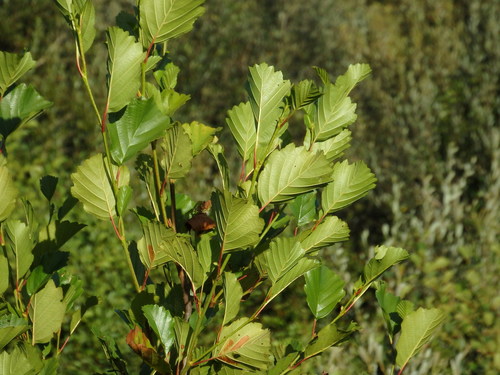
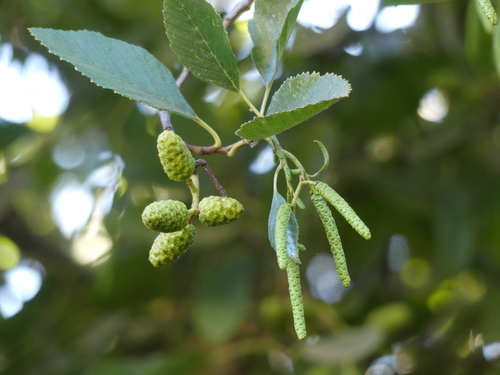
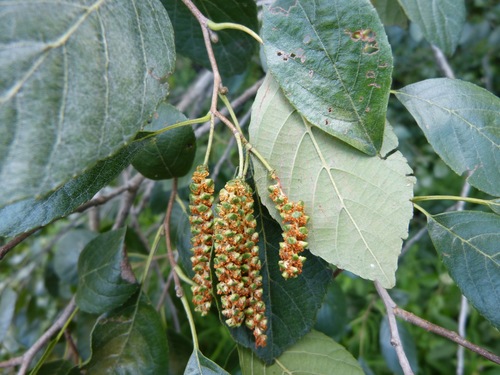
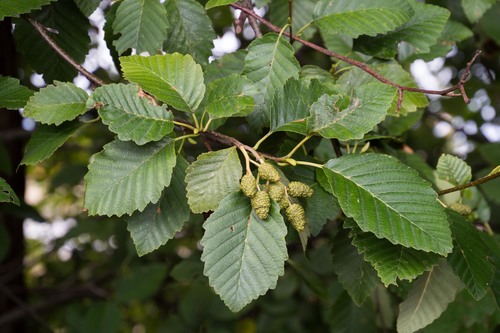
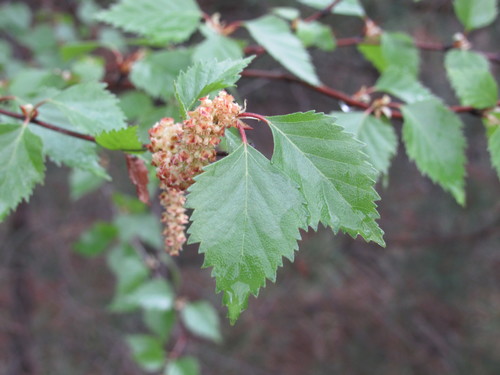
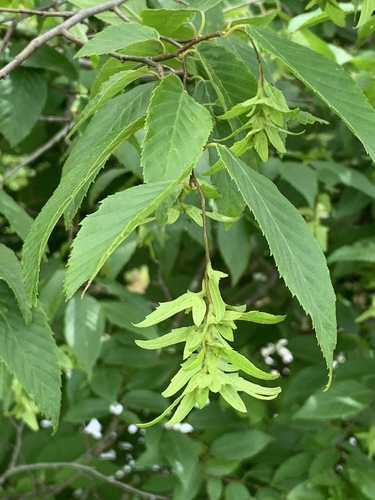
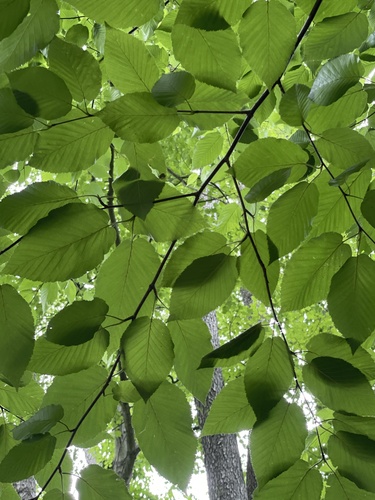
Betula lenta, scientifically named Betula lenta L., is a medium-sized deciduous tree. It typically grows 15 m (50 ft) to 24 m (80 ft) tall, can reach 30 m (98 ft), and may exceptionally reach 35 m (115 ft). Its trunk can grow up to 60 cm (2 ft) in diameter. Young trees of this species have smooth bark with distinct horizontal lenticels, a trait common to most birches, and are sometimes mistakenly identified as cherry trees. Unlike most well-known birch species, older mature or ancient Betula lenta develop vertical cracks that form irregular scaly bark plates, revealing rough dark brown bark patterns. Members of the public often do not recognize these mature trees as Betula lenta, because most people are only familiar with the species' characteristic smooth young bark. When scraped, its twigs release a strong wintergreen scent from methyl salicylate produced in the bark. Its leaves are alternate and ovate, measuring 6–15 cm (2.4–5.9 in) long and 4–8 cm (1.6–3.1 in) broad, with finely serrated margins. It produces wind-pollinated catkins 2.5–3 cm (0.98–1.2 in) long: male catkins are pendulous, while female catkins are erect. The fruit matures in autumn, and consists of many tiny winged seeds packed between the catkin bracts. Most seed production occurs in trees between 40 and 200 years old, though light seed crops can appear as early as when trees are 15 years old, and can continue throughout the tree's lifespan. This species is native to eastern North America, ranging from southern Maine west to southernmost Ontario, and south along the Appalachian Mountains to northern Georgia. Ecologically, the leaves of Betula lenta are a food source for some caterpillars. The solitary leaf-cutter bee Megachile rubi cuts pieces from its leaves to line the cells of its nests. Deer do not usually browse young Betula lenta, so this tree can grow in areas with large deer populations. Its close relative Betula alleghaniensis is heavily browsed by deer, which explains why Betula alleghaniensis is scarce and Betula lenta is abundant in regions with high deer populations. In abandoned fields, Betula lenta often forms thickets that protect other tree species that cannot resist deer browsing. This tree is commonly called black birch, and its wood weighs 47 pounds per cubic foot, making it a heavy wood used for furniture, millwork, and cabinets. Its wood is similar to that of yellow birch, and the two are often not distinguished in the lumber trade. Betula lenta sap flows about one month later than maple sap, and flows much faster. Trees can be tapped in the same way as maple trees, but sap must be collected around three times more often. Birch sap can be boiled just like maple sap, and produces a stronger syrup similar to molasses. The sap can also be used to make birch beer. Boiling destroys the volatile wintergreen oil present in the plant. The inner bark can be eaten raw as an emergency food, and twigs and inner bark can be steeped to make tea. Black birch was once harvested heavily to produce oil of wintergreen, and the species became nearly endangered before synthetic wintergreen oil became widespread in the 1950s and 1960s.