About Beta vulgaris L.
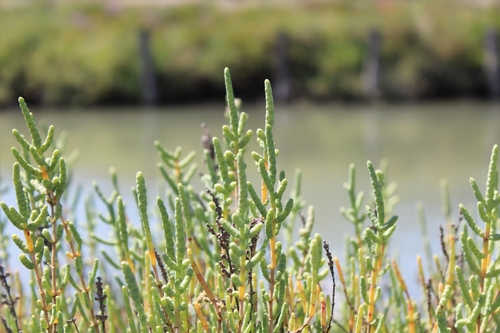
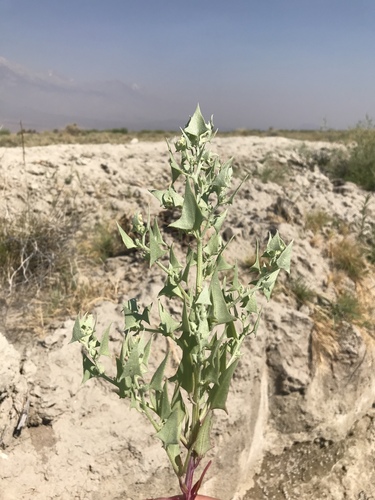
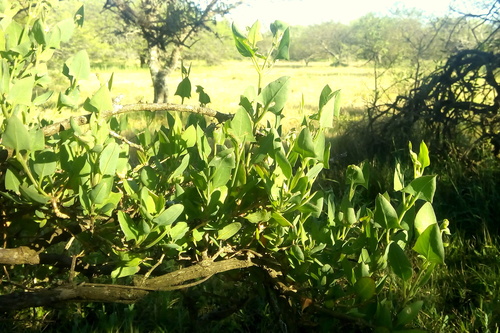
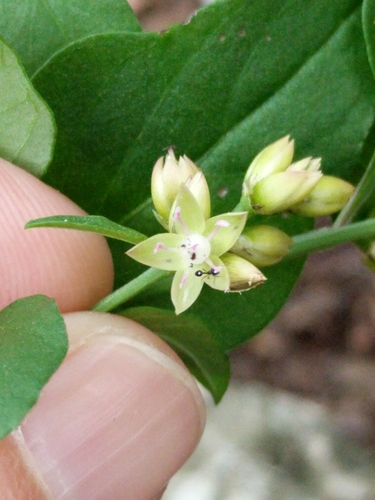
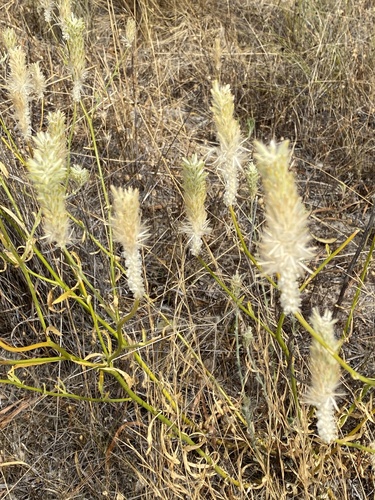
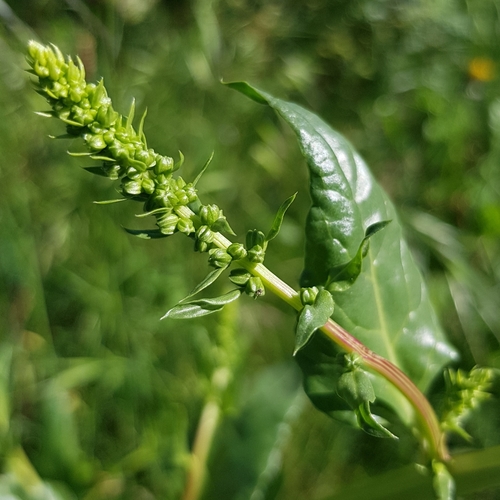
Beta vulgaris, scientifically named Beta vulgaris L., is a herbaceous plant that is usually biennial, and rarely perennial. Wild plants can reach up to 120 cm (4 ft) in height, and very rarely reach 200 cm; almost all cultivated forms of the species are biennial. For the subspecies Beta vulgaris subsp. vulgaris that includes cultivated forms, the roots are dark red, white, or yellow, and range from moderately to strongly swollen and fleshy. Roots of the wild subspecies are brown, fibrous, sometimes swollen, and woody. Stems grow either erect, or often procumbent in wild forms; they are simple or branched in their upper section, and have a ribbed, striate surface. Basal leaves have a long petiole, which may be thickened and colored red, white, or yellow in some cultivars. The simple leaf blade ranges from oblanceolate to heart-shaped, and is colored dark green to dark red. It is slightly fleshy, usually has a prominent midrib, and has an entire or undulate margin. Leaf blades are 5–20 cm long on wild plants, and are often much larger on cultivated plants. Upper leaves are smaller, with blades ranging from rhombic to narrowly lanceolate. Flowers are borne in dense spike-like inflorescences that are interrupted near the base. Very small flowers grow in glomerules holding one to three, and rarely up to eight flowers, in the axils of short bracts, or in the upper half of the inflorescence without bracts. The hermaphrodite flowers are urn-shaped, green or tinged reddish, and consist of five basally connate perianth segments (tepals) measuring 3–5 × 2–3 mm, five stamens, and a semi-inferior ovary with 2–3 stigmas. The perianths of adjacent flowers are often fused. Pollination occurs via wind or insects, with wind pollination being the more important method. When in fruit, the flower glomerules form fused, hard clusters. The individual fruit, a utricle, is enclosed by a leathery, incurved perianth, and is immersed in the swollen, hardened base of the perianth. The seed is positioned horizontally, is lens-shaped, measures 2–3 mm, and has a red-brown, shiny seed coat. The seed contains an annular embryo and abundant perisperm, which acts as feeding tissue. This species is diploid, with 18 chromosomes arranged in two sets; the chromosome count notation for this is 2n = 18. Wild forms of Beta vulgaris are distributed across southwestern, northern, and southeastern Europe along Atlantic coasts and the Mediterranean Sea, extending through North Africa and Macaronesia to Western Asia. They have become naturalized in other continents. Wild plants grow on coastal cliffs, stony and sandy beaches, salt marshes, coastal grasslands, and ruderal or disturbed areas. Cultivated beets are grown across the world in regions that do not experience severe frosts. They prefer relatively cool temperatures between 15 and 19 °C, and leaf beets can tolerate warmer temperatures than beetroot. As descendants of coastal plants, they tolerate salty soils and drought. They grow best on pH-neutral to slightly alkaline soils that contain plant nutrients, along with additional sodium and boron. Beets act as a food source for the larvae of many Lepidoptera species. Beets are cultivated for four main purposes: as fodder (such as mangelwurzel), for sugar production (the sugar beet), as a leaf vegetable (chard or 'Bull's Blood'), or as a root vegetable ('beetroot', 'table beet', or 'garden beet'). It is the most important crop within the large plant order Caryophyllales. 'Blood Turnip' was once a common name for garden beet root cultivars, and examples include Bastian's Blood Turnip, Dewing's Early Blood Turnip, Edmand Blood Turnip, and Will's Improved Blood Turnip. The 'earthy' taste of some beetroot cultivars comes from the compound geosmin. Researchers have not yet determined whether beets produce geosmin themselves, or if it is produced by symbiotic soil microbes that live in the plant. Breeding programs can develop cultivars with low geosmin levels that produce a flavor more acceptable to consumers. Beets are one of the most boron-intensive modern crops. This dependency may have evolved as a response to the constant sea spray exposure of the species' pre-industrial ancestor. On commercial farms, a harvest of 60 tonnes per hectare (26.8 tons per acre) requires 600 grams of elemental boron per hectare (8.6 ounces per acre) for growth. A lack of boron causes the meristem and shoot to stop growing properly, eventually leading to a condition called heart rot. The roots and leaves of beet have been used in traditional medicine to treat a wide variety of health issues. Ancient Romans used beetroot as a treatment for fevers and constipation, alongside other ailments. In his work De re coquinaria, Apicius gives five soup recipes intended to be used as a laxative, three of which include beet root. Platina recommended eating beetroot with garlic to counteract the effects of 'garlic breath'. Both beet greens and Swiss chard are classified as high oxalate foods, and high oxalate intake is linked to the formation of kidney stones. Cultivars with large, brightly colored leaves are grown for decorative purposes.